The purpose of this travel diary is to document a week spent in Svalbard in June 2025, day by day, in the same way that I recounted my trip on the Norwegian Coastal Express last year (sorry for any mistakes, I am French and English is not my native language).
OSLO, JUNE 21, 2025 – DAY 1
It is hot and stifling here, just like in France, which I have just left. But this is Norway, for goodness’ sake! The sky is blue and the sun is beating down. Oslo is buzzing. Thousands of Norwegians and tourists have taken over the city centre streets.
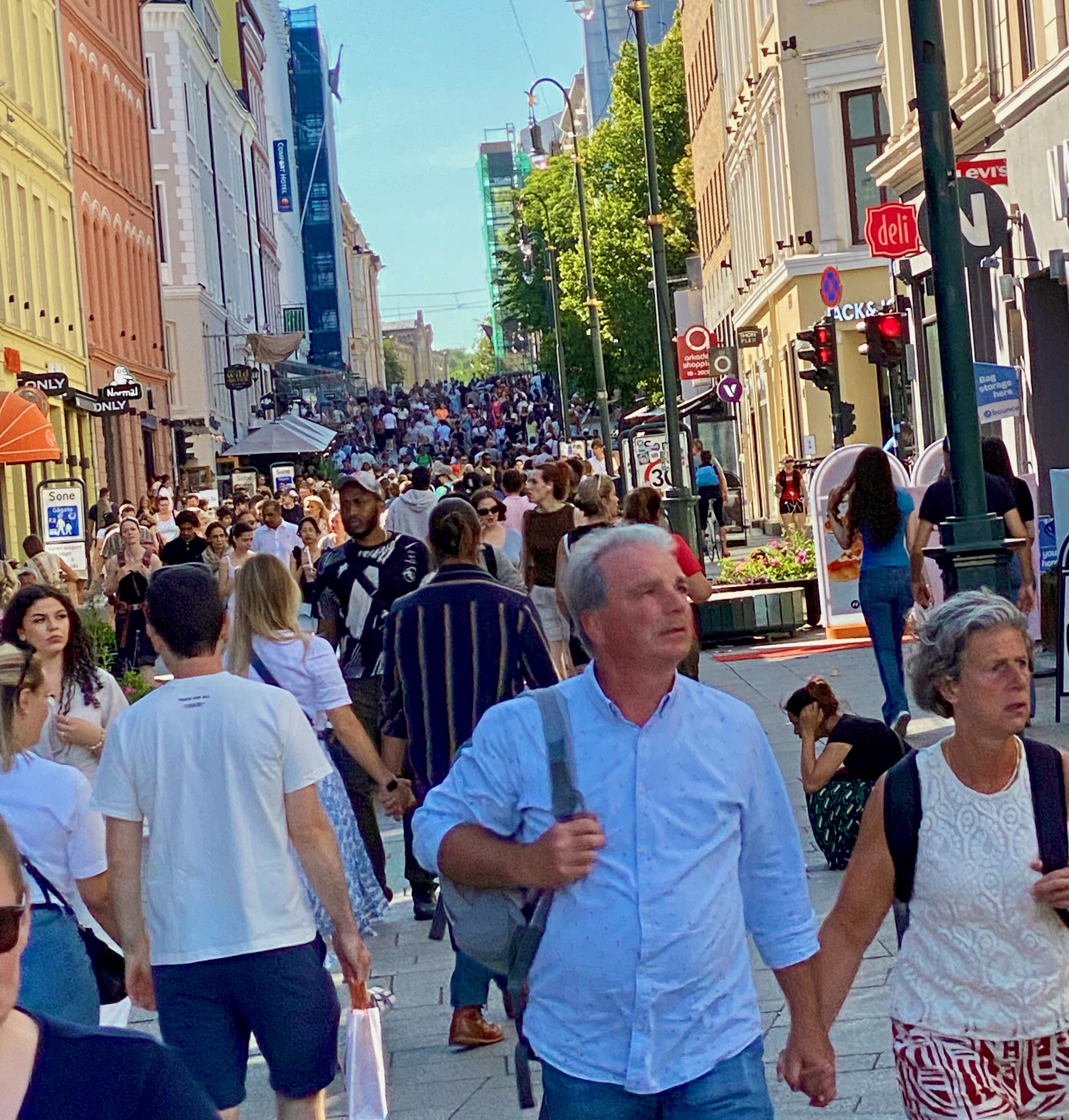
The last time I came here was decades ago. The city has changed dramatically. The entire centre is now pedestrianised. The quays of the harbour are lined with packed cafés and café boats.

Perhaps they are celebrating Music Day, as they do in France, or the summer solstice, although that is a few days later.
This gives the impression of a serene and peaceful city, which is far from what we sometimes see elsewhere.
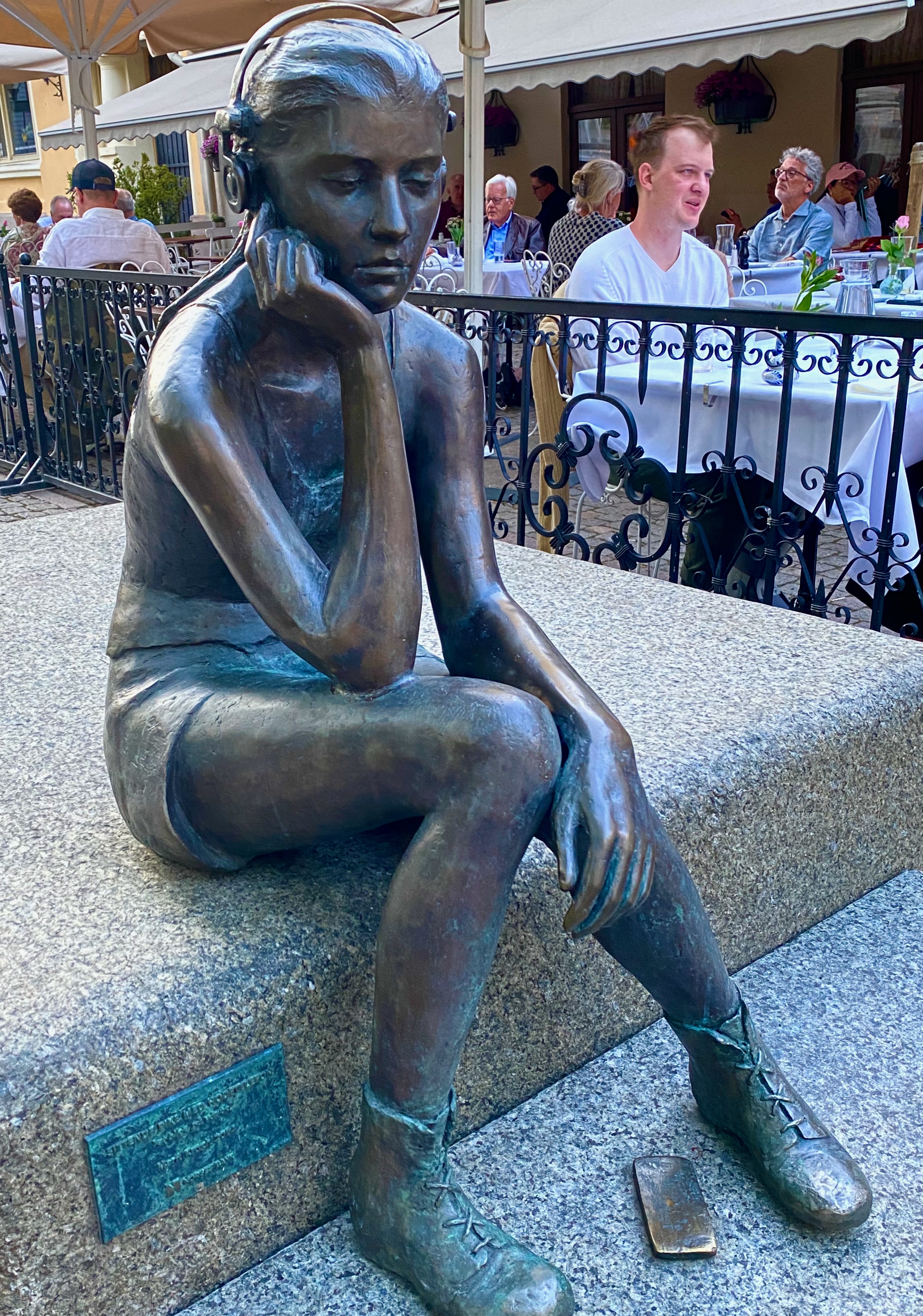
I am always amazed by the number of statues here, which can be found on every street corner. Not just statues of politicians or famous people, but ordinary people too.


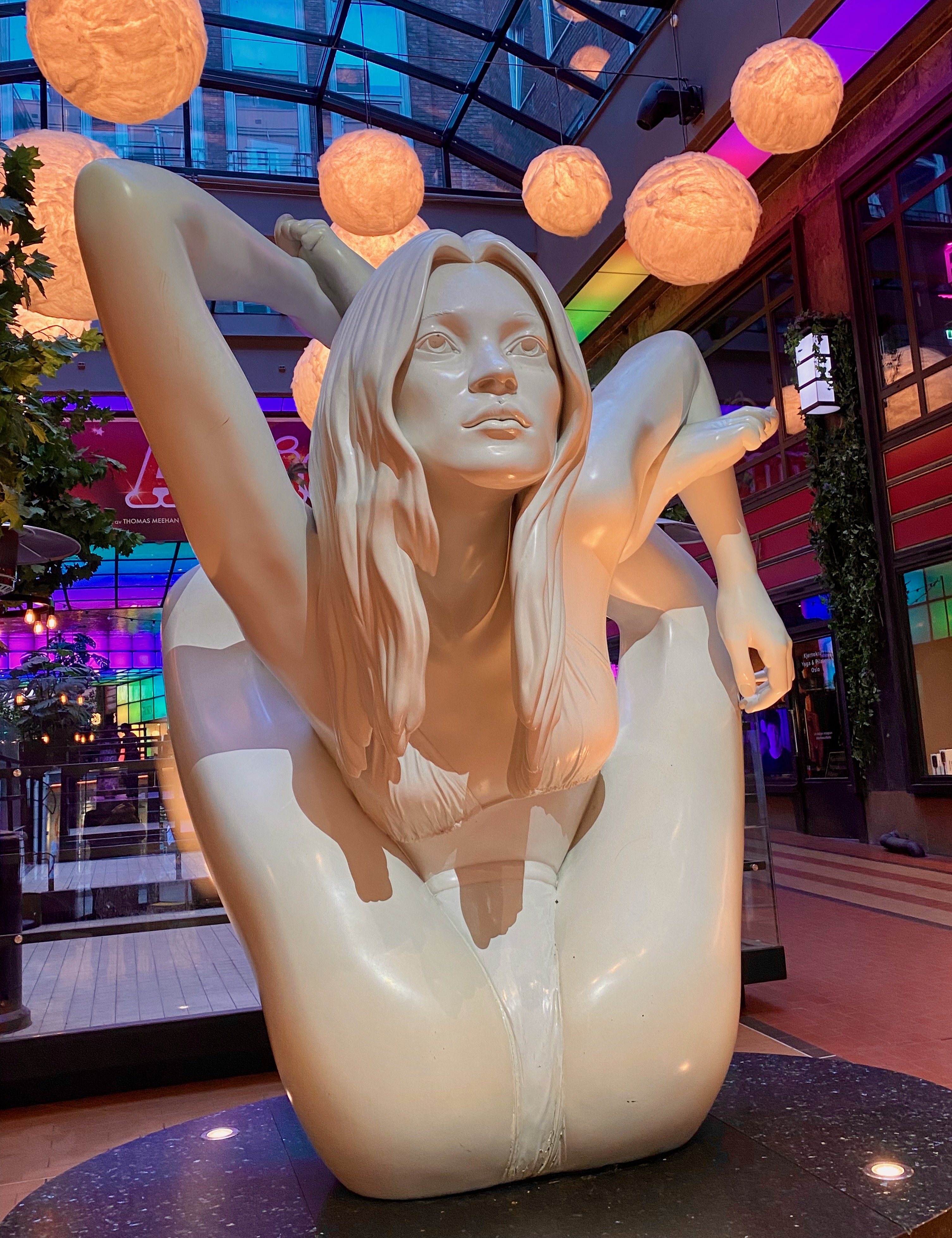
I’m not talking about the one of Kate Moss in the gallery of a large cinema in Oslo, though.
Why choose Oslo as the starting point for a trip to Svalbard? Because it’s the only way to get there. It’s the best place to catch a flight to Longyearbyen in Svalbard. The best? In any case, it’s the cheapest and most regular. SAS (the Swedish airline) and Norwegian (the Norwegian airline) share the route, with one return flight daily in high season.
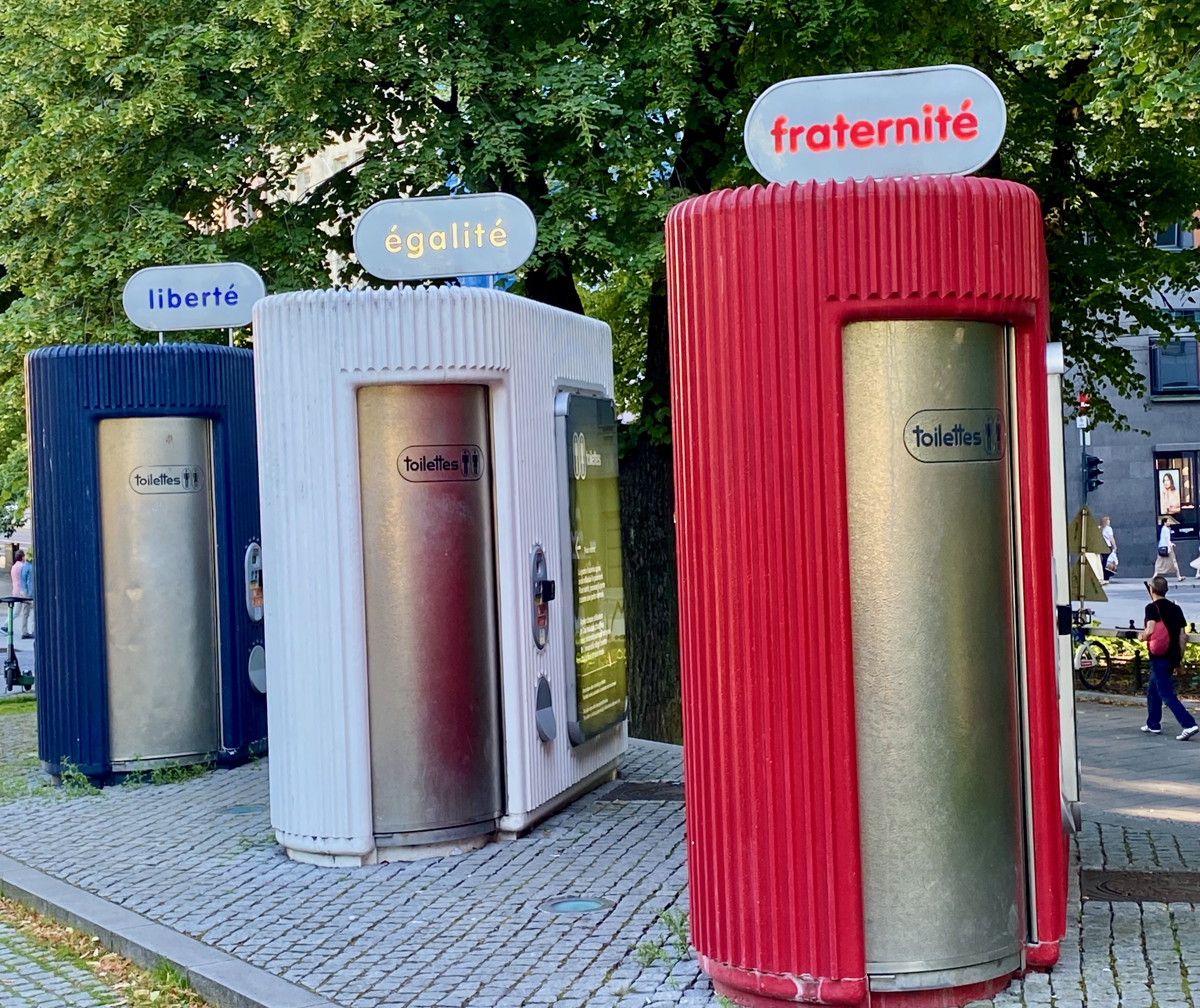
For a little French touch, check out these blue, white and red toilets in the centre of Oslo, named ‘Liberté-Égalité-Fraternité’.
LONGYEARBYEN, JUNE 22, 2025 – DAY 2
Arriving here feels like reaching the end of the world. The small airport is surrounded by snow-capped mountains and a single road leads to the ‘big city’ of Longyearbyen, which has a population of 2,600 out of the archipelago’s total population of 2,960. The temperature is milder than expected at 6°C, but it feels a few degrees colder.
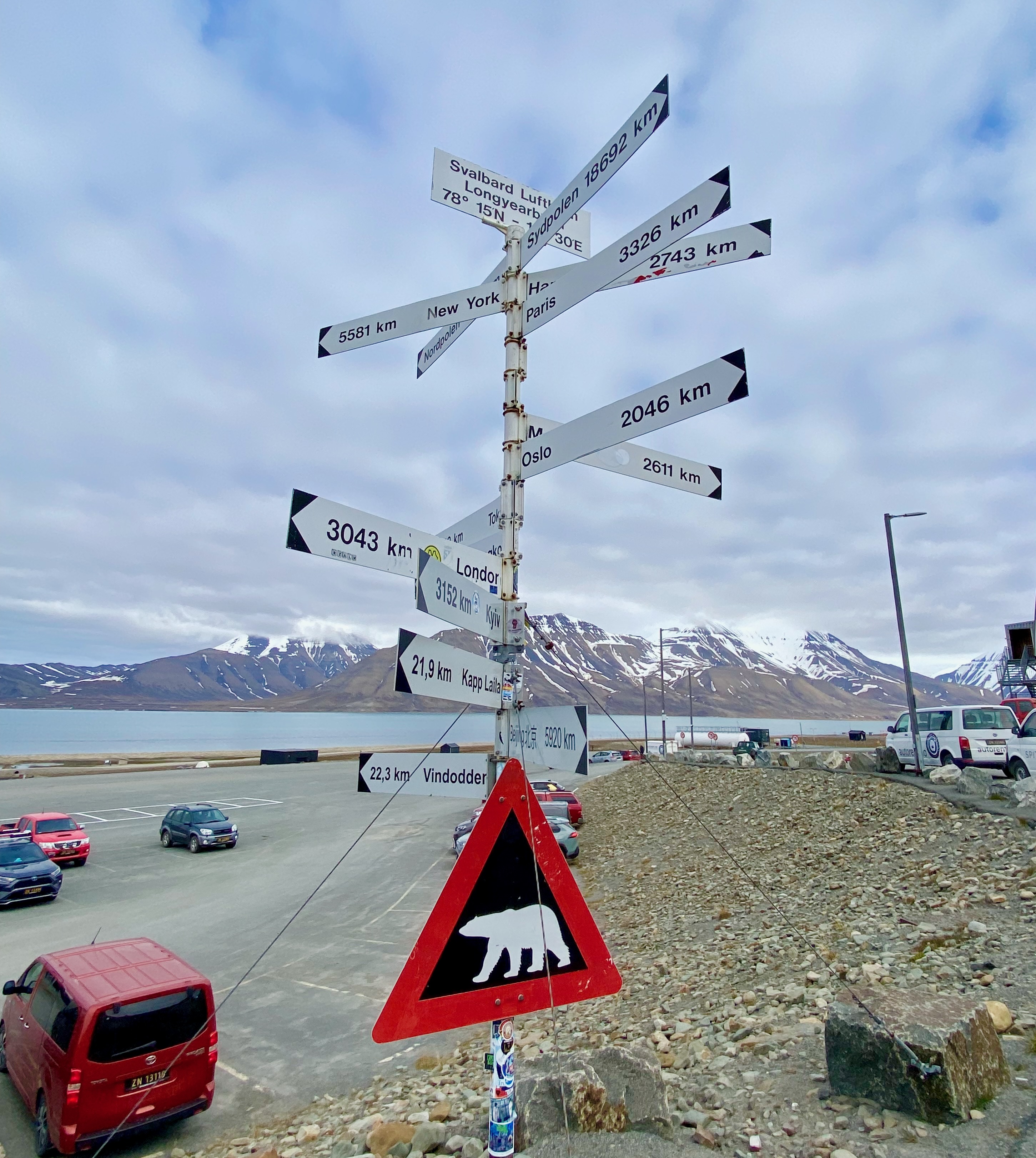
Longyearbyen is essentially just one main street lined with shops and cafés, all of which are open on this Sunday. The town looks fake, with temporary structures. Everything seems new or under construction.
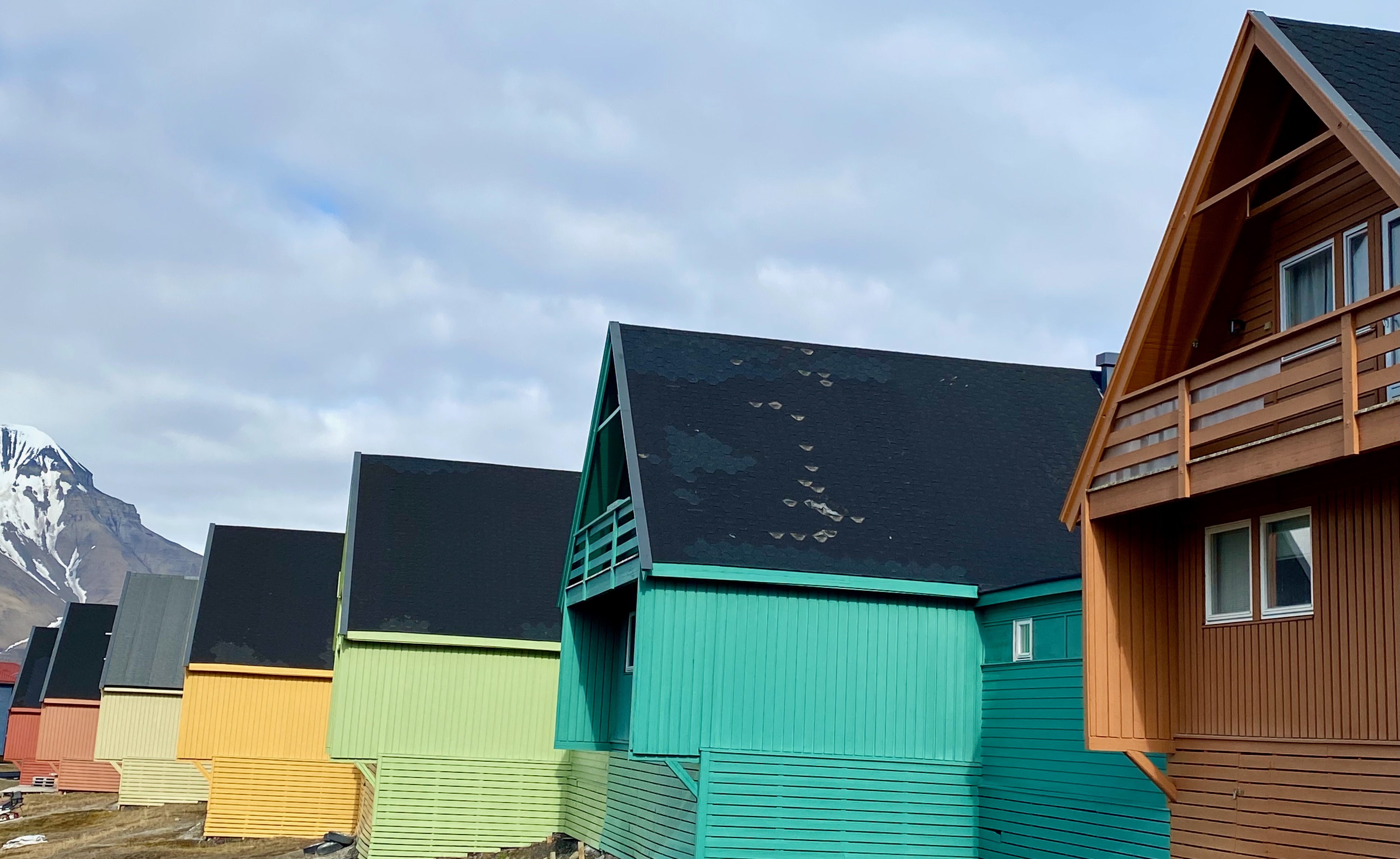
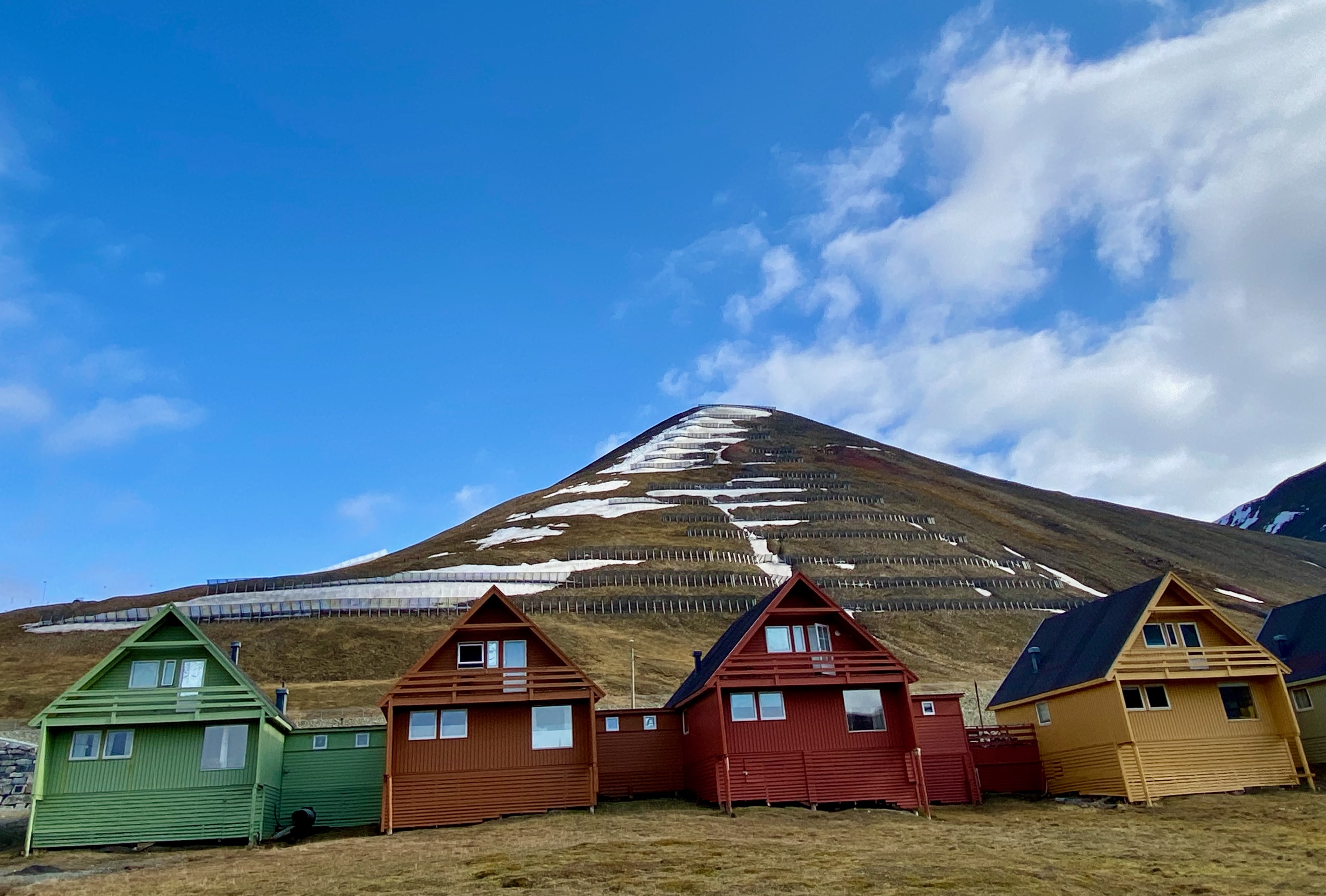
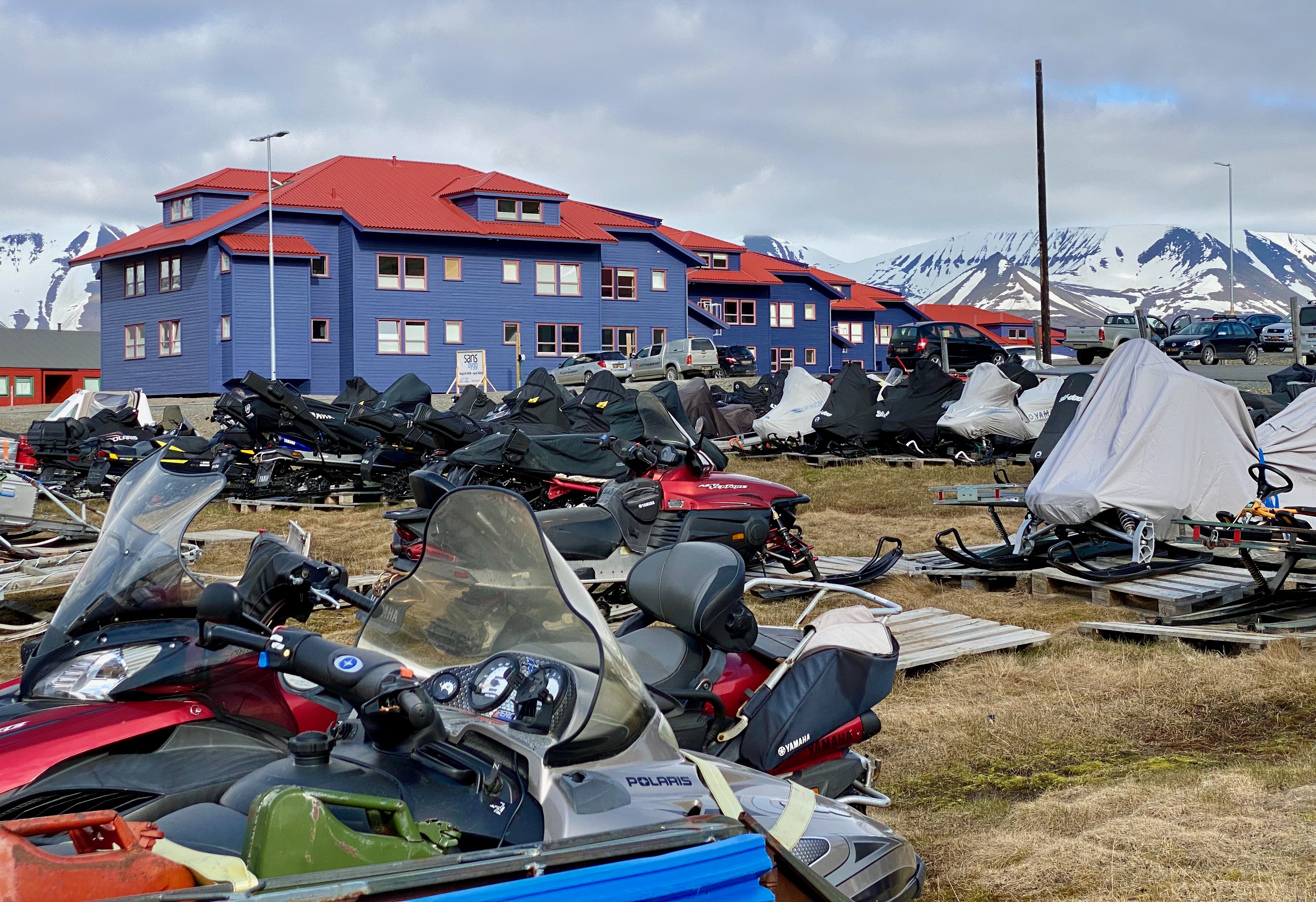
Without the snow, everything looks bare. There is short grass, pipes and construction equipment everywhere. There are also hundreds of abandoned snowmobiles in the waterlogged pastures. However, it’s not a graveyard as these snowmobiles will be back in service in a few months. I can’t imagine what the traffic is like. Are there snowmobile accidents like there are car accidents?
Curiously, for a French person, there is no litter or rubbish on the ground. It feels like being somewhere entirely different…
The shops, especially the large Coop supermarket, stock everything you could possibly need. At Norwegian prices, of course — even though there are no taxes here !

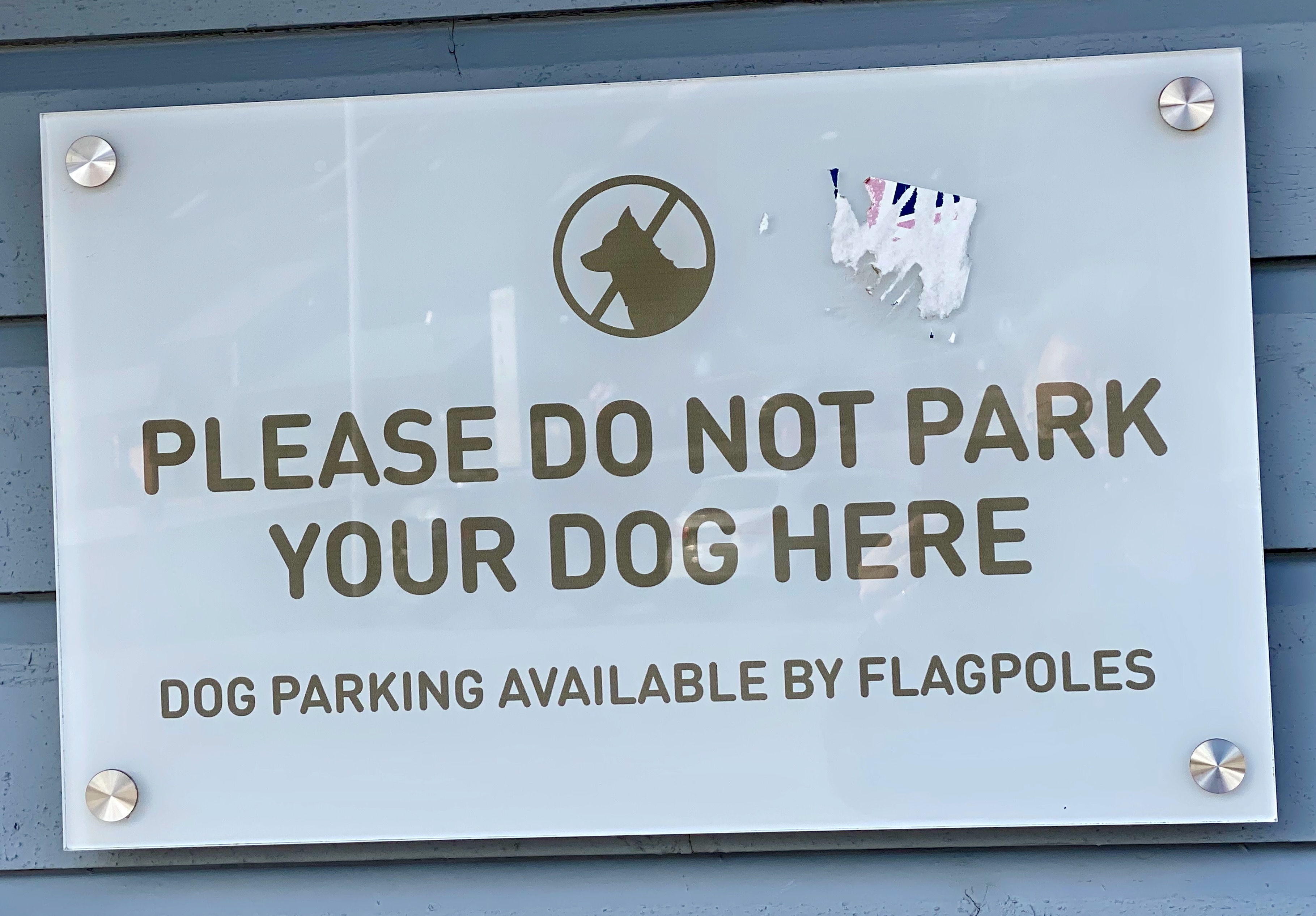
Rereading what I’ve written, I don’t want to give the reader a negative impression: Longyearbyen is a pleasant, quiet town. This is especially surprising and strange for those coming from elsewhere. For example, there’s this sign for dogs, which is no joke…
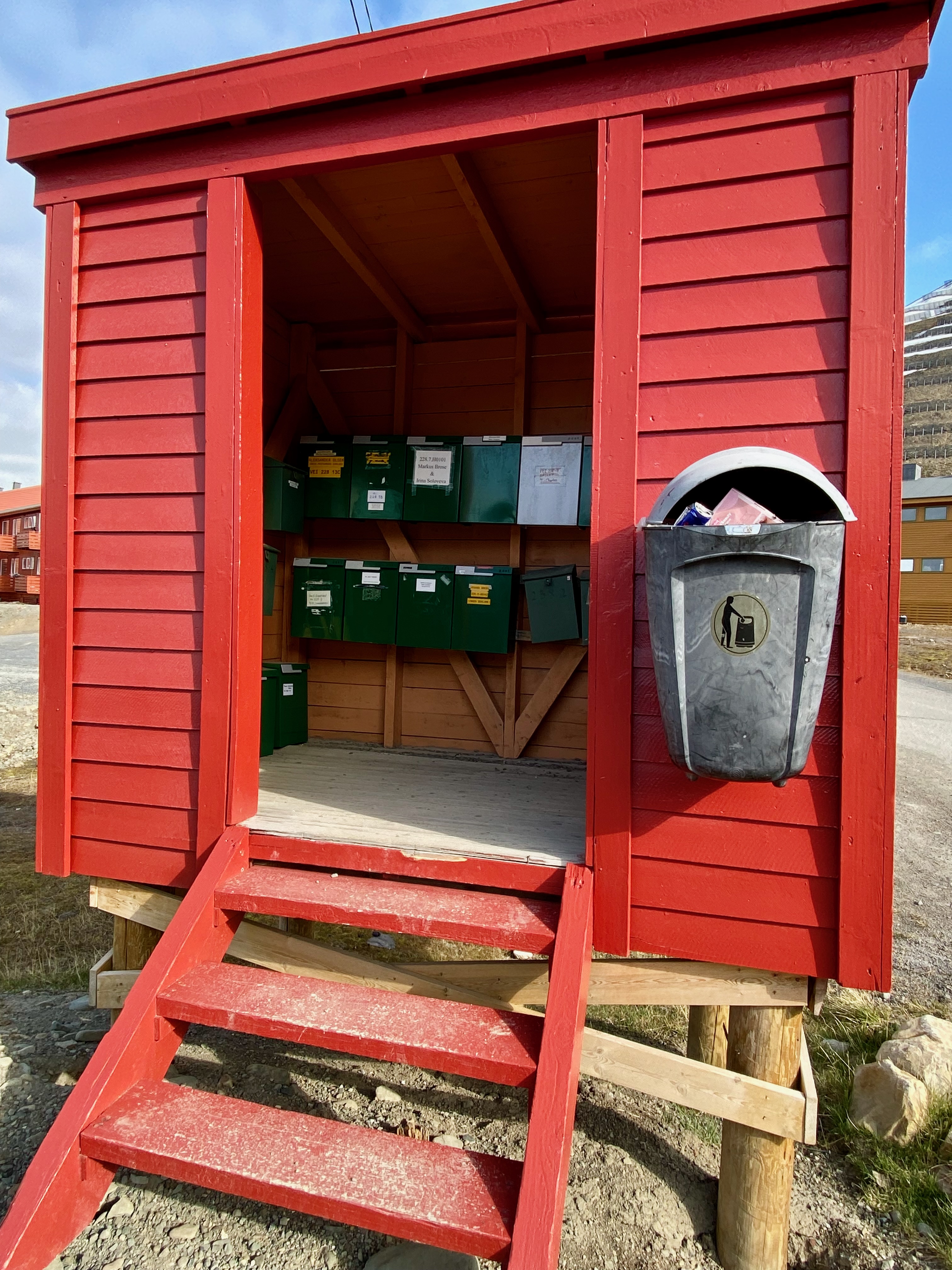
Or these postal shelters with boxes where the postman delivers the mail. During the snowy season, this must be the only option for postmen. Residents come to collect their mail on snowmobiles.
Back at the Hurtigruten Svalbard hotel, I enjoy the jacuzzi. Outside, the temperature is a few degrees above zero, and I can see mountains that are partially covered in snow. Absolute bliss!
LONGYEARBYEN, 23 JUNE 2025 – DAY 3
In the streets of Longyearbyen and in its hotels, you will hear people speaking English, German, Spanish, Chinese and sometimes even French. In short, every language in the world is spoken here. People come here to explore the archipelago.
The number of travel agencies and expeditions has increased in recent years. It’s as if tourism is set to replace income from the now-closed coal mines.
Before leaving for Svalbard, I researched all the available options. Why did I choose Hurtigruten Svalbard? Because I have fond memories of last year’s trip on the Hurtigruten coastal express. I wanted a trip that wasn’t too long or expensive.
Prices for Svalbard can sometimes exceed £8,500 for ten days. Transparency is important to me, so I should mention that I paid 20,895 Norwegian kroner (NOK), or £1,790, for a five-day expedition at the end of June.
Useful information: I am not sponsored.
Before boarding this afternoon, the Hurtigruten team put together an introductory programme about Svalbard for us. The first stop was Barentz Camp, outside the city, where a musher, or « dog handler », told us about the life of a sled dog.

Incidentally, I learned a great deal about the subject from reading En kald dag i helvete (A Frozen Day in Hell), a slightly erotic novel by the renowned Norwegian author Anna B. Ragde.
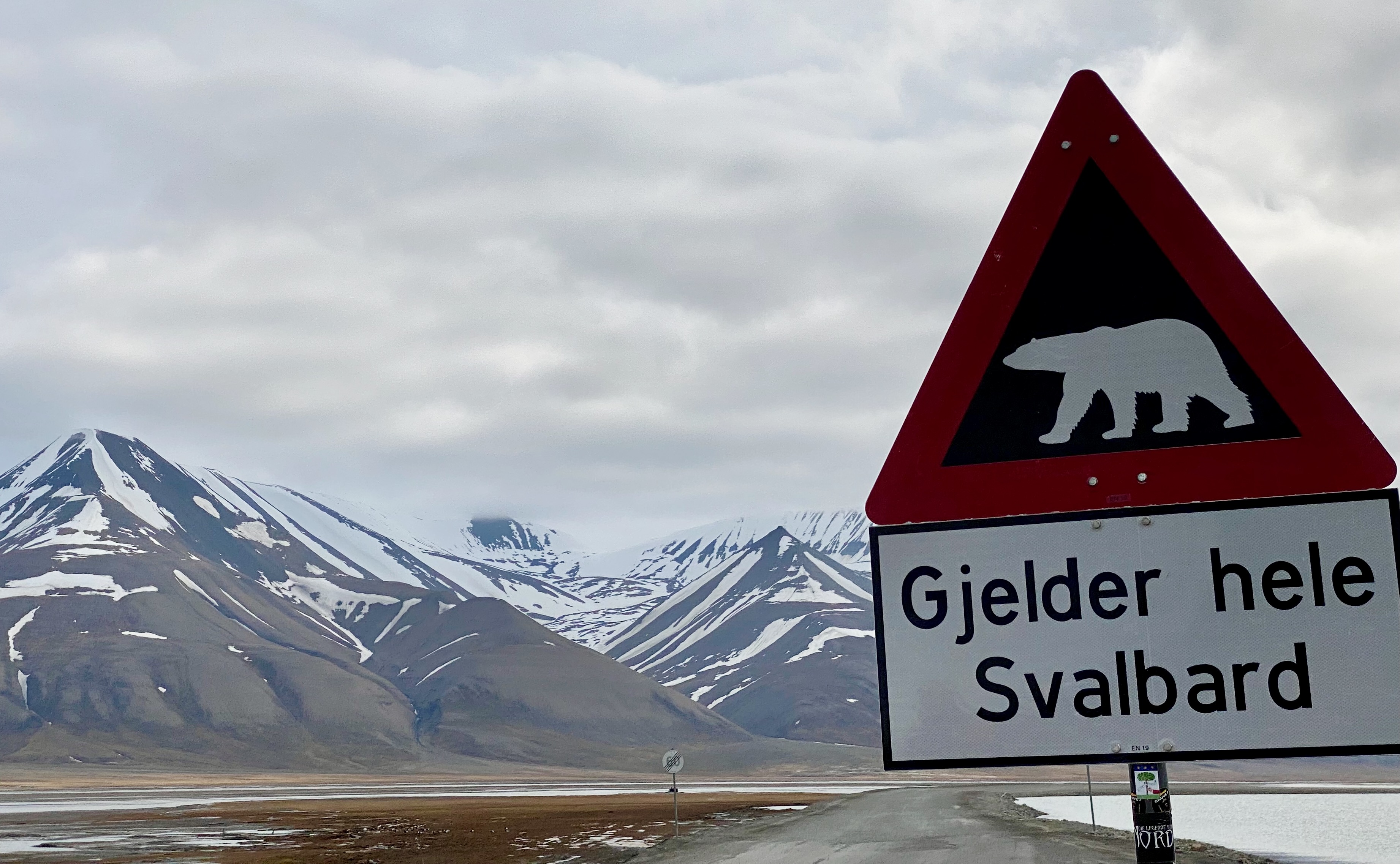
Afterwards, we enjoyed coffee and pancakes in a cosy wooden cabin. Here, we learnt everything there is to know about polar bears, the symbol of Svalbard. Everything revolves around them and the fear and awe they inspire. There are signs on the outskirts of the town urging caution.
Our young Estonian guide carries a rifle to scare them away.
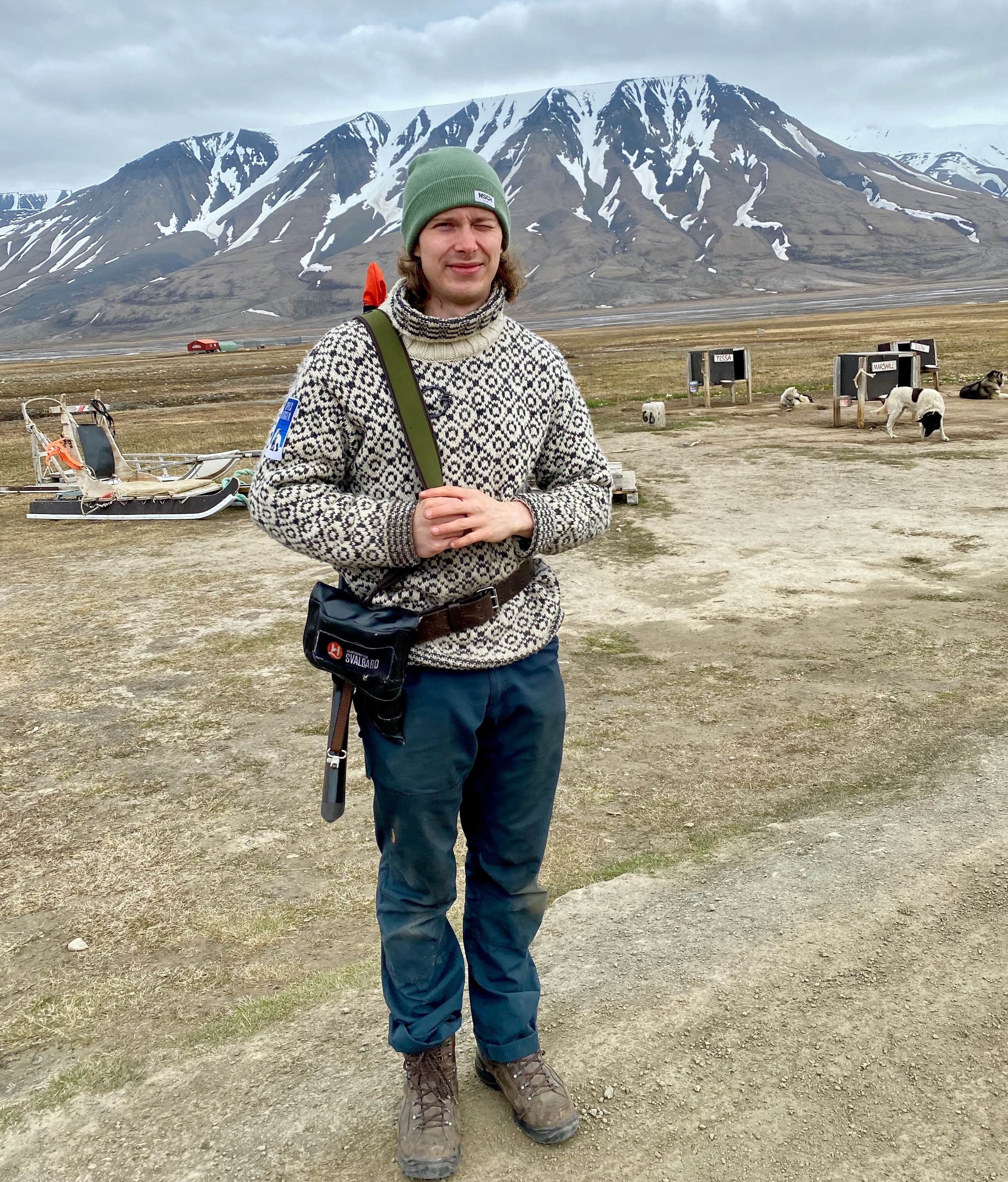
- Have you ever seen one ? we ask him.
- No, never, he admits with a smile. They only come to this area once a year, in the middle of winter.
We are in the west of Svalbard, where polar bears live in the east, where the ice remains permanently.
What did I learn from this mini-lecture? A male polar bear can weigh up to 700 kg and reach a height of 3 metres. It can smell its favourite food, seals, from 32 kilometres away.
There are more polar bears (around 3,000) than inhabitants in Svalbard, but only 250 on the island of Spitsbergen.
A quick note to clarify the geography : Svalbard is the name of the entire archipelago, while Spitsbergen is the name of the main island, which is virtually the only inhabited one.
Last tour of the museum. This is a living, very modern museum celebrating the archipelago. It recounts expeditions throughout history, great explorers and large animals.
There are impressive photos showing the melting of the glaciers between 1900 and today.
We must not forget Spitsbergen’s important mining past. Below is a photo of a mining facility in Longyearbyen from the 20^(th) century.
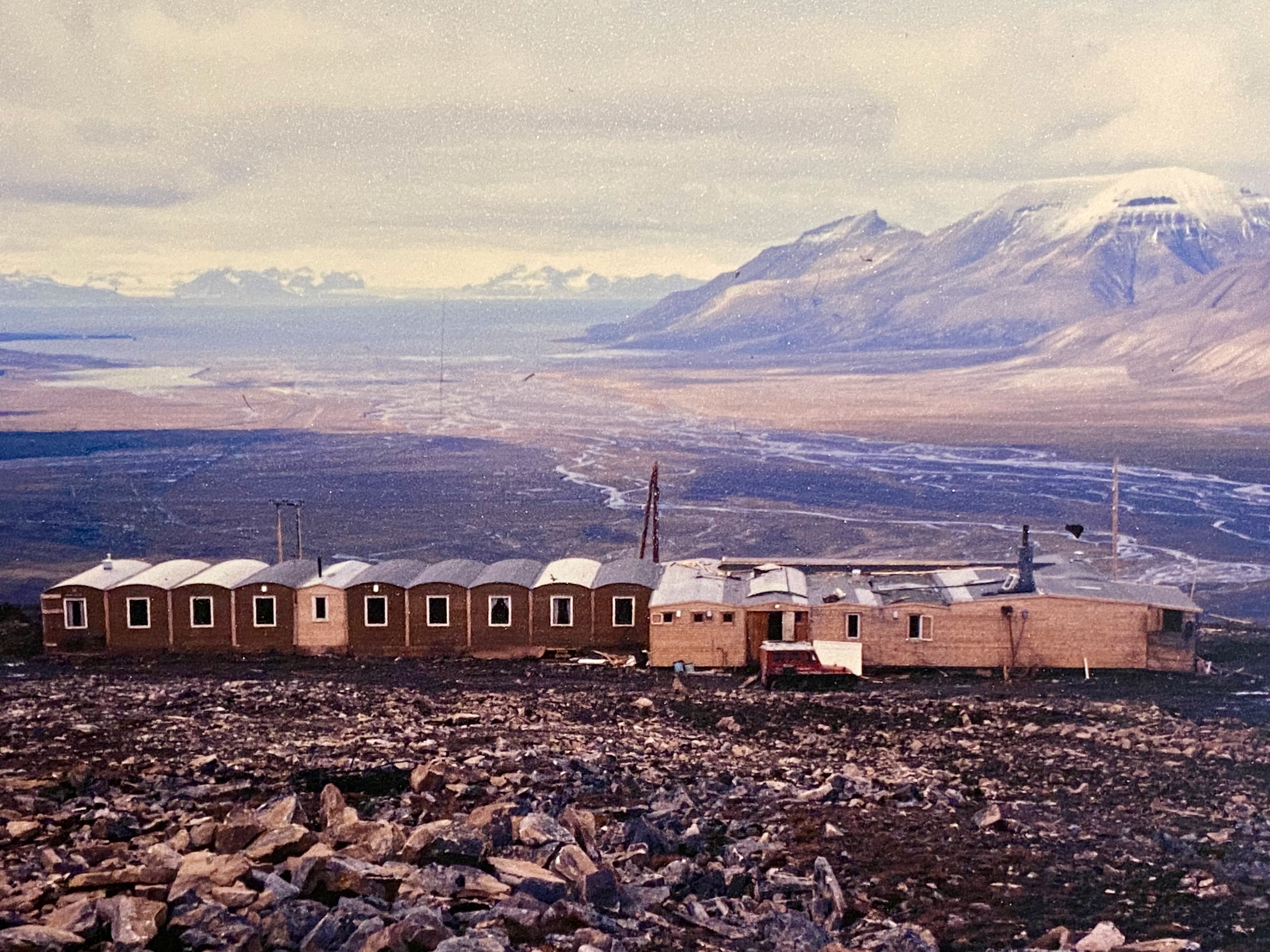
This is a copy of a photo from the museum.
Let’s go back in time. In 1920, several nations, including France, signed the ‘Spitsbergen Treaty’. Norway gained sovereignty over the archipelago on the express condition that citizens of various countries would have the right to exploit natural resources « on an absolutely equal footing ».
The Russians, who signed the agreement in 1924, were quick to exploit the coal clause. For a long time, they outnumbered the Norwegians on site.
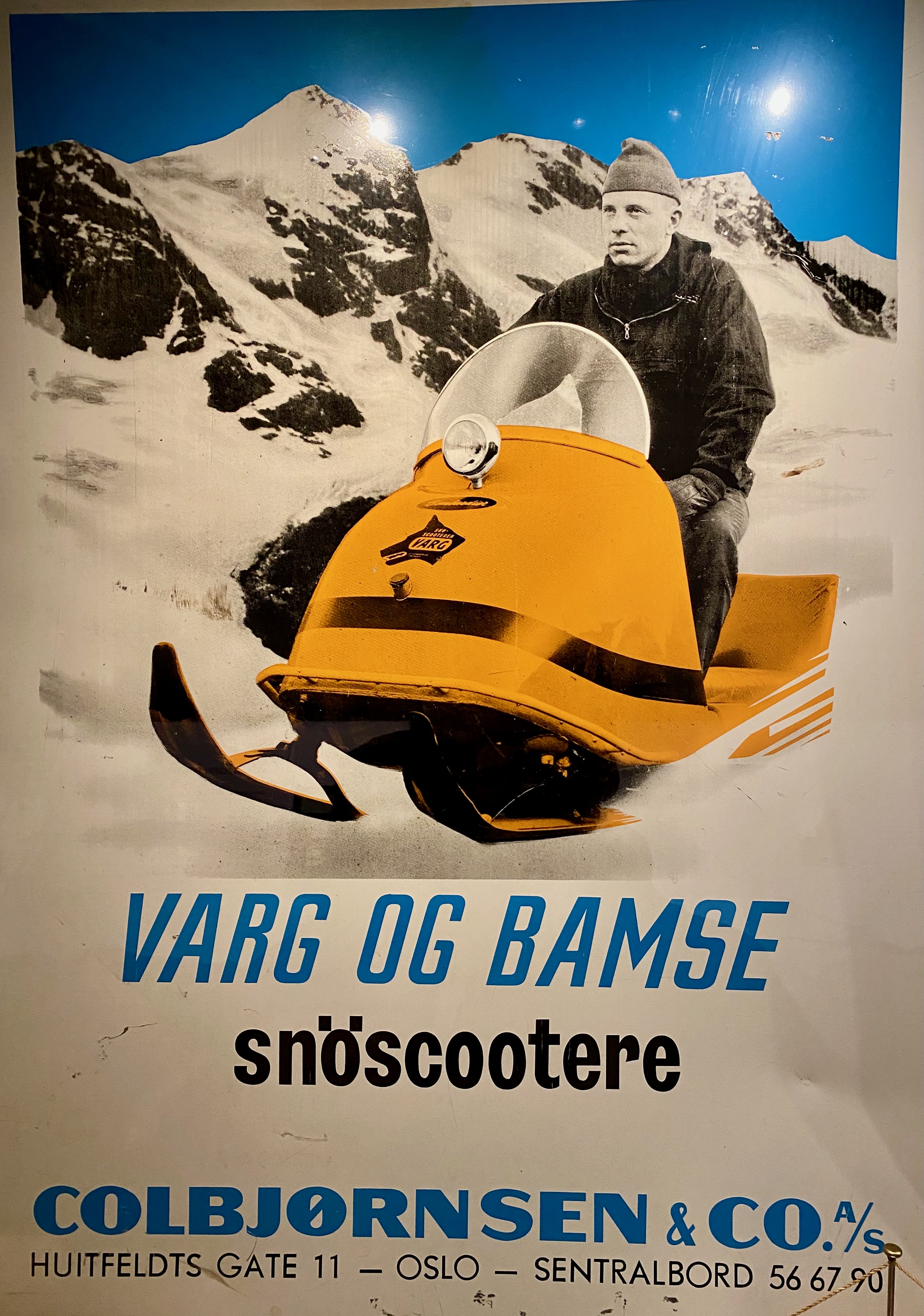
Gruve 7, the last active mine, ceased operations in 2025. This was due to the war in Ukraine: Russian coal was being sent to Germany, but the European Union banned its import.
LONGYEARBYEN, JUNE 23, 2025 – DAY 3 (CONTINUED)
This time, we’re boarding. Our boat, the Serenissima, is not docked.
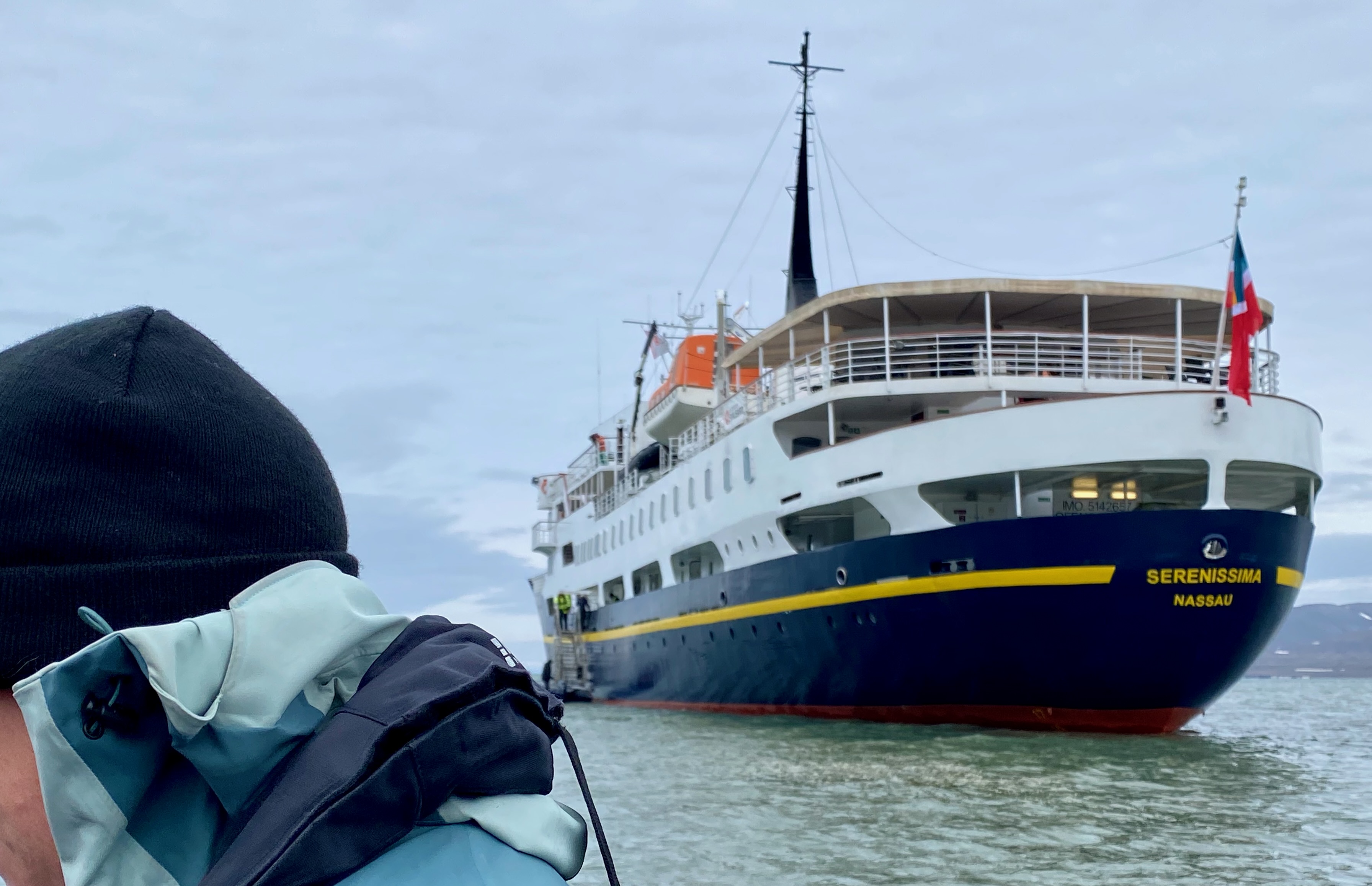
We have to get there by Zodiac, taking every precaution and wearing a life jacket to avoid going overboard.
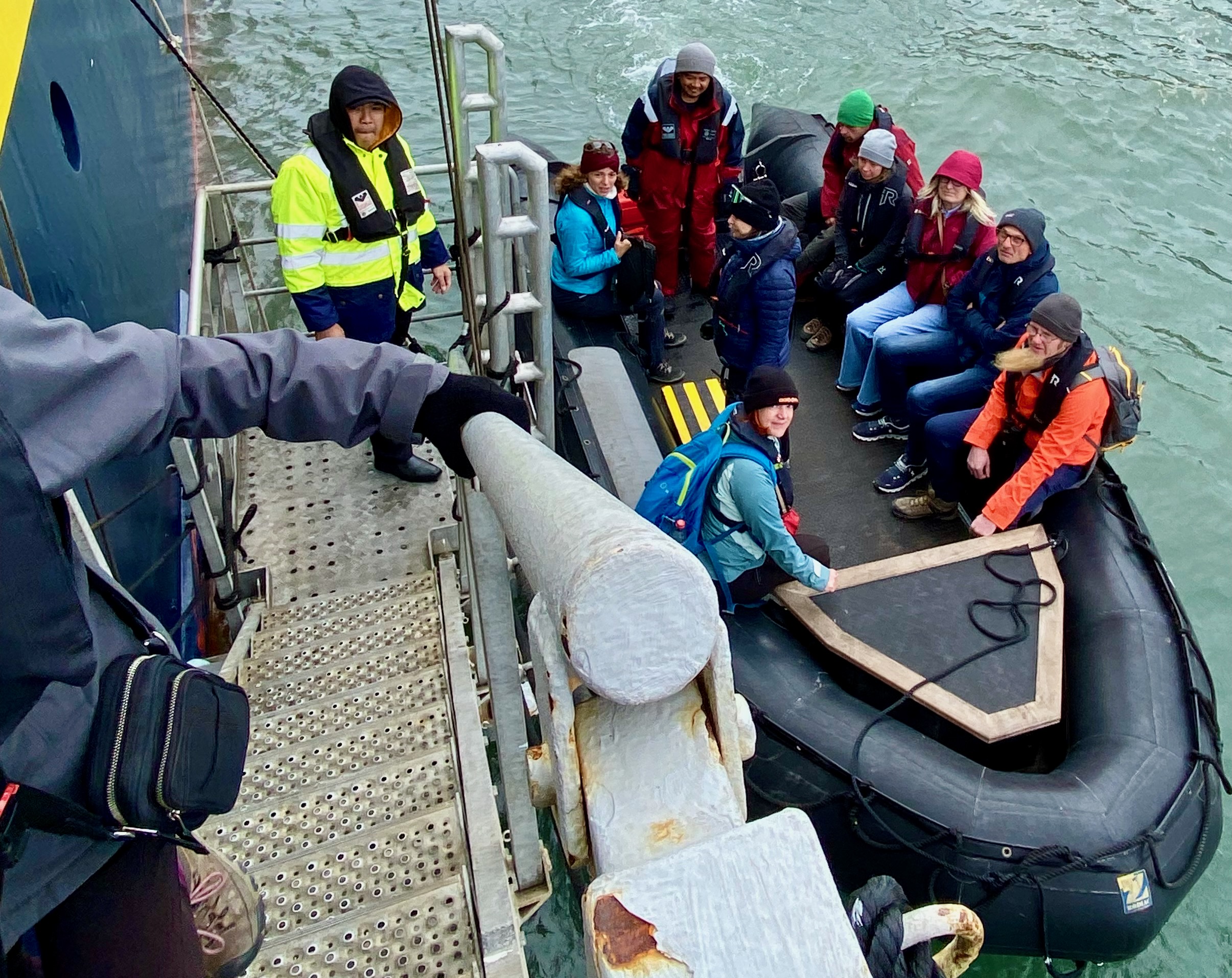
Everything is made easy for us. On board, my small cabin (501) is very comfortable and has everything I need. First of all, there is a large porthole through which I can watch the landscape go by.
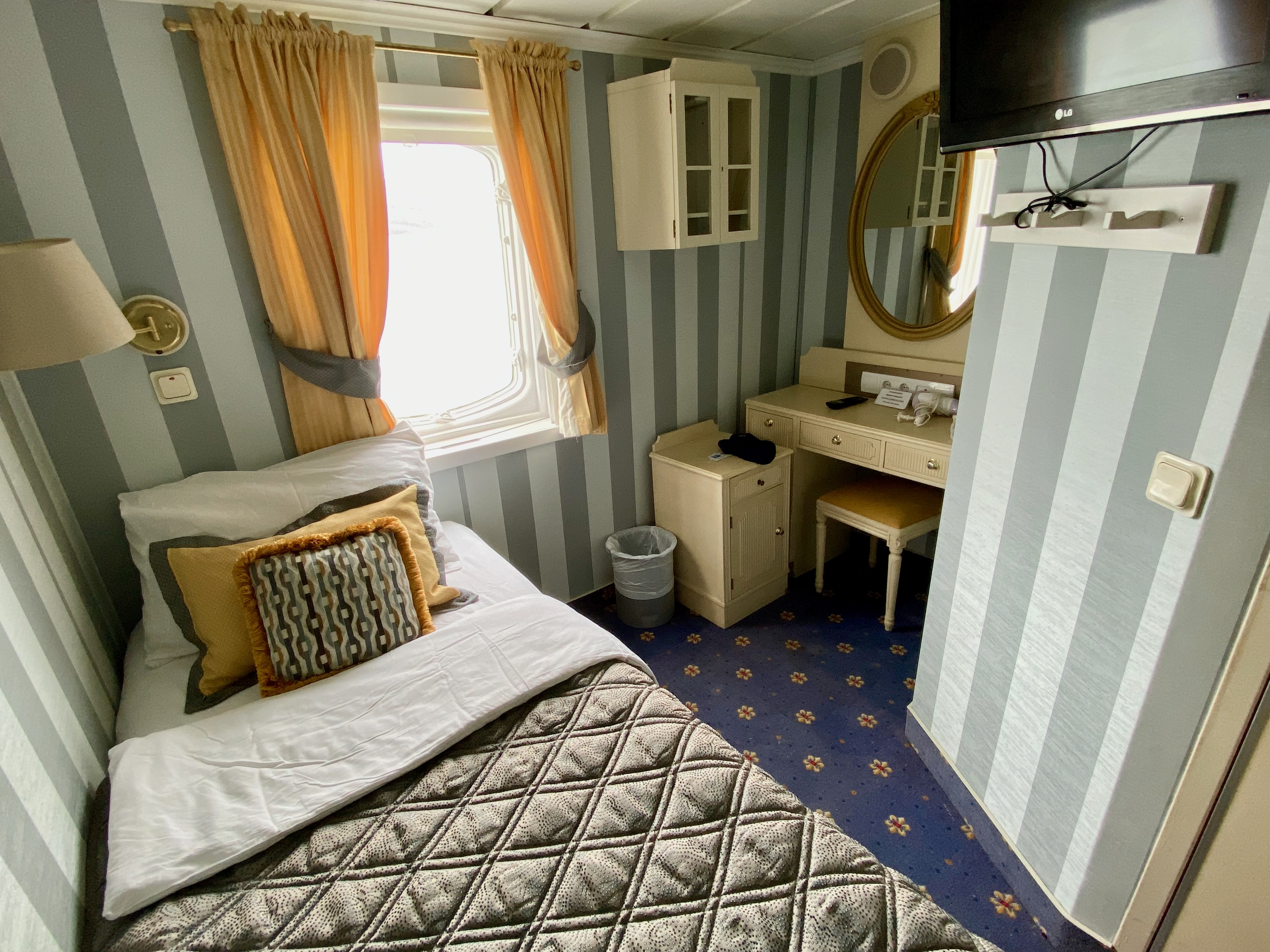
The rooms and corridors are decorated with illustrations of Venice. I was surprised by this until I remembered that the city is nicknamed Serenissima.
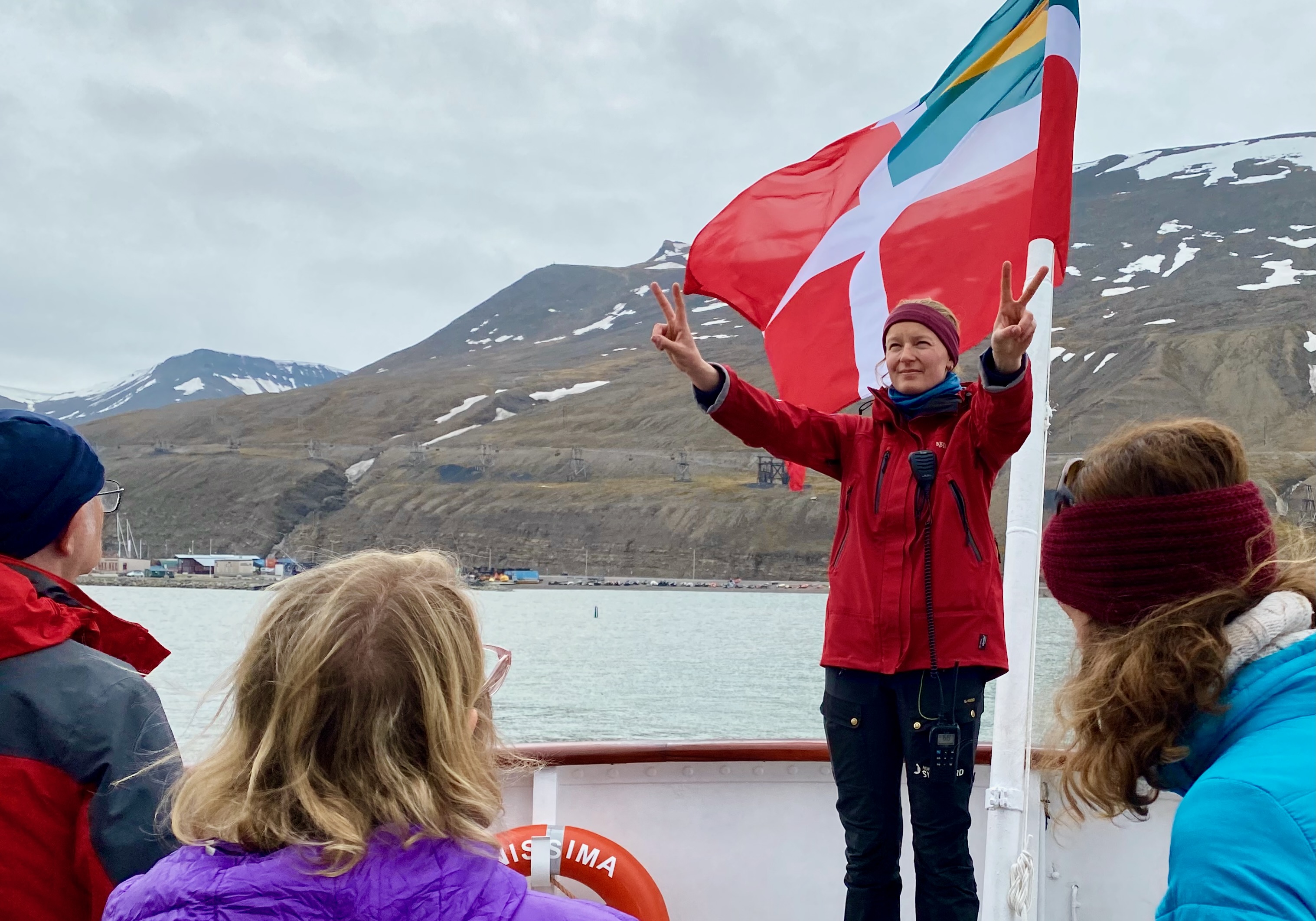
The first safety instructions are given on deck.
After a well-stocked buffet lunch, the boat guides introduced themselves and informed us of the on-board rules (we were certainly well supervised).
Most of them are students or former students from Norway, Germany, Switzerland and, in one case, Longyearbyen (« Unlike the others, I didn’t have a choice », she said, smiling).
The same is true of many of the guides we meet in town. They hail from Argentina, France and all over Europe and came to study geology, glaciation or the environment in Svalbard – the ideal place – before deciding to stay for at least a seasonal job.
The ship’s service staff come from the Philippines or South America, no doubt for low wages.
Luckily, there are only about 50 passengers on a ship that can hold 103.
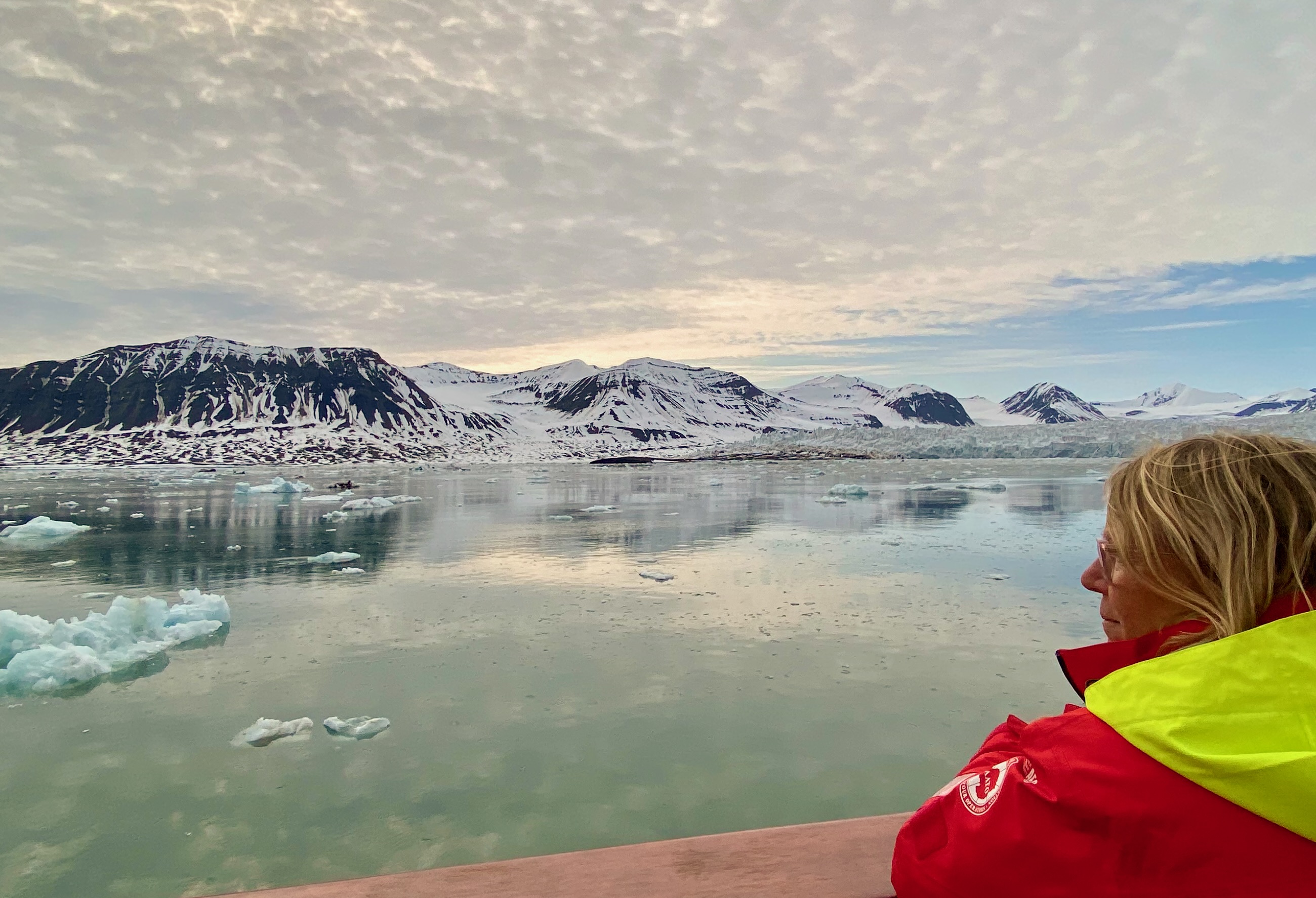
We spend part of the afternoon approaching a glacier, first metre by metre and then centimetre by centimetre. It is very impressive and fantastic. We are fascinated and already glad we chose this trip. At one point, the silence is broken by the sound of a small piece of the glacier collapsing into the fjord.
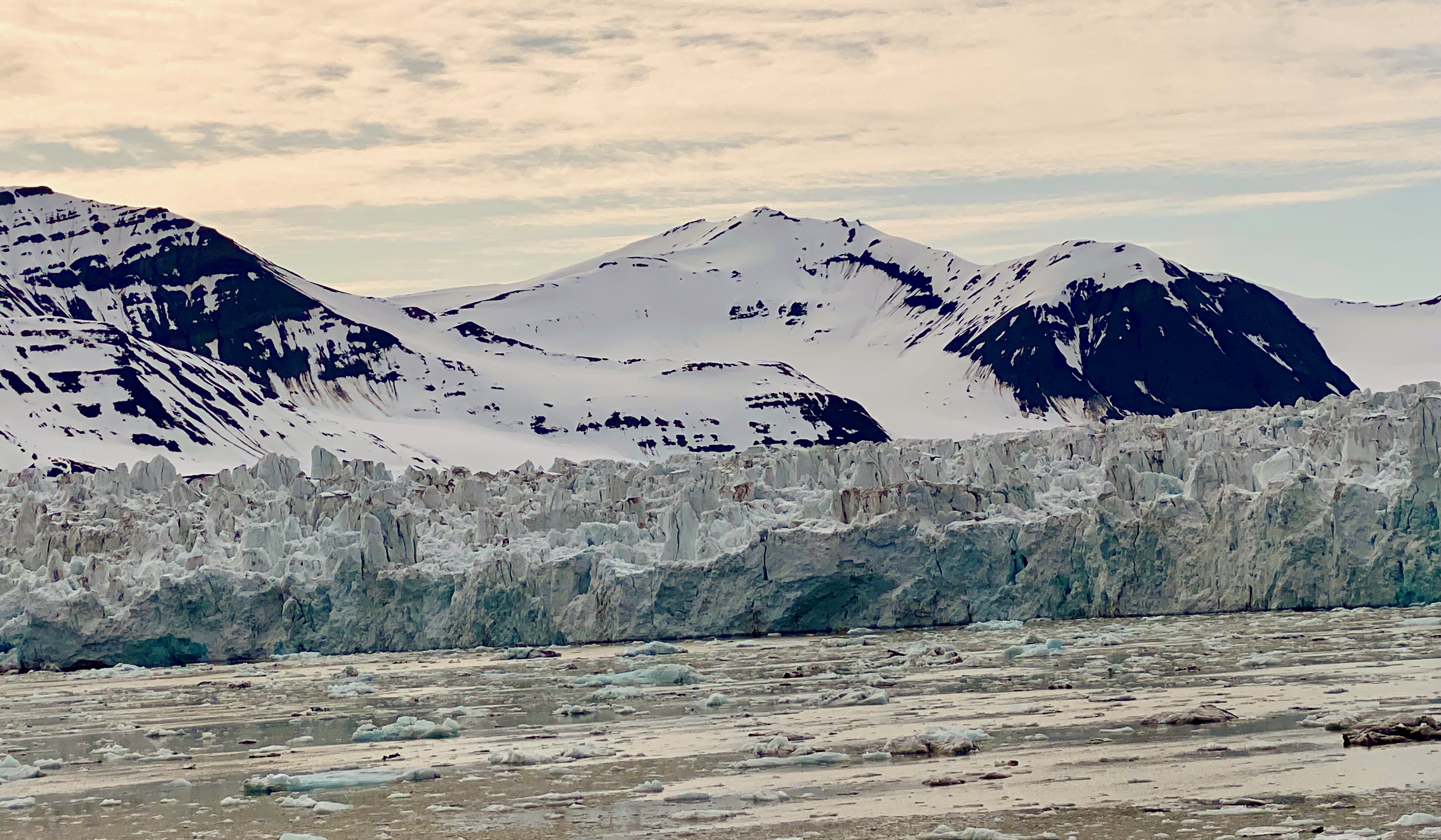
We are wearing red Hurtigruten windbreakers and boots, which will come in handy when we go hiking tomorrow.
At the end of the afternoon, there is a slideshow presentation of the wild animals of Svalbard. It starts with all the birds, from fulmars to puffins, including black-legged kittiwakes and Arctic terns. A good idea is that we get to hear their respective calls. I loved the guillemot’s ‘ha ha ha’.
We also talk about seals, Arctic foxes and, of course, polar bears. I enjoyed learning that walruses can weigh up to 1,500 kg — bears can go home and cry!
NARENESET, JUNE 24, 2025 – DAY 4
During the night, the Serenissima sailed to the northernmost point of Spitsbergen (marked on our itinerary map).
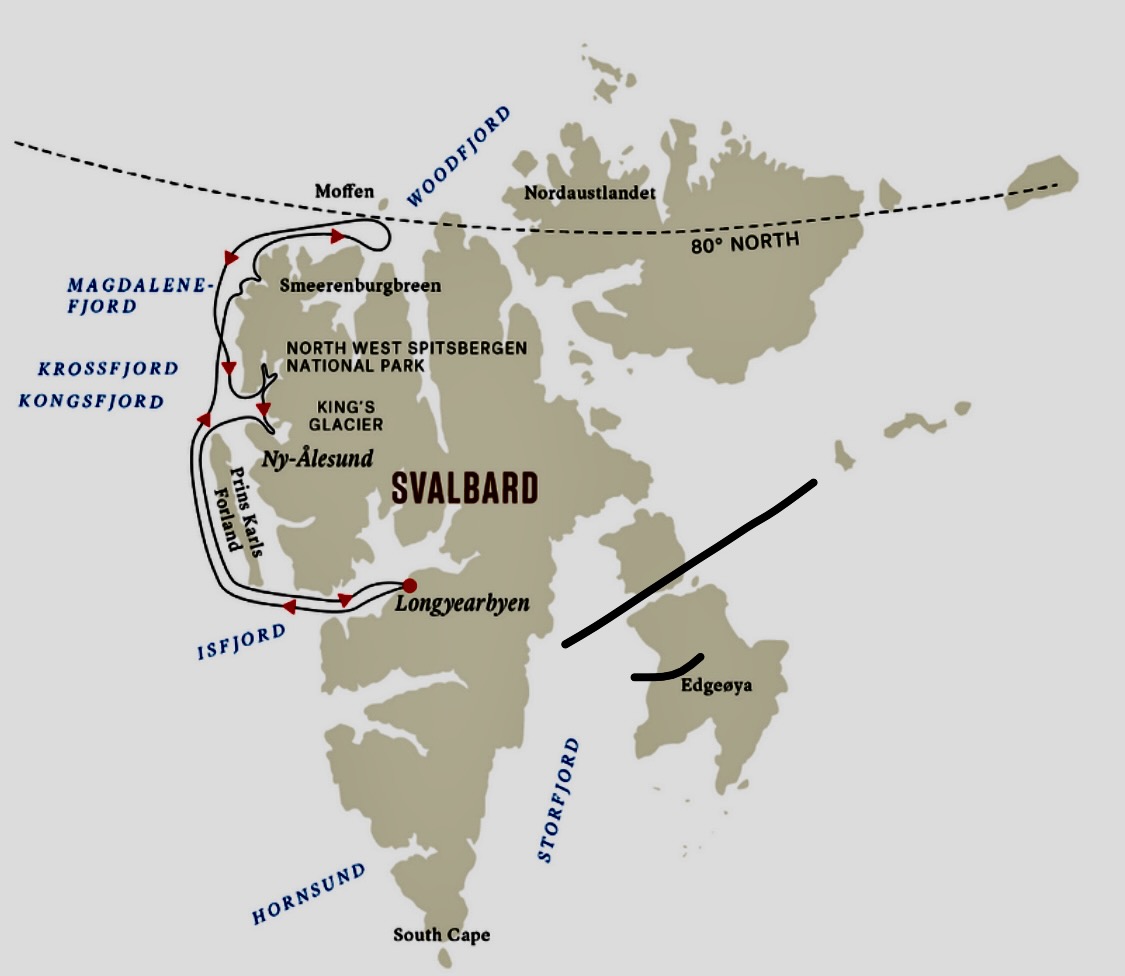
We woke up in the Raudfjorden (which means ‘red fjord’ – I don’t know why), which had much more snow on the slopes than the day before. It is 20 km long and 5 km wide.
At this time of year, it is light 24 hours a day. Last night, we had to close the shutters and draw the curtains to achieve some darkness. It was a strange sensation; no matter whether it was 10 a.m., 4 p.m. or 2 a.m., the temperature and light were more or less the same.
We had breakfast with the people we happened to share a table with on our first night in Longyearbyen: Helen, an Australian; Dave, an American; Per, a Swede from the north; and Alex, a young French woman from Nancy who works for the UN in Geneva. They all have one thing in common: they have all travelled extensively around the world. Since then, we have been meeting up at every meal. Not that we mind.
Unlike last year’s trip on the Coastal Express, where the passengers were outsiders on a ship originally intended for transporting supplies and passengers between northern villages, this trip is primarily about exploration and respect for the environment. There is a strong educational focus.
Before disembarking on the slopes of Narreneset fjord, we receive a briefing on respecting nature: we must not take anything from the ground (a rule that has been in place since 1946), and we must put our boots in a footbath on our return to avoid transporting grasses from one part of Svalbard to another. We are also reminded about the danger posed by polar bears : « They can arrive at any time, even if we haven’t seen any before ».
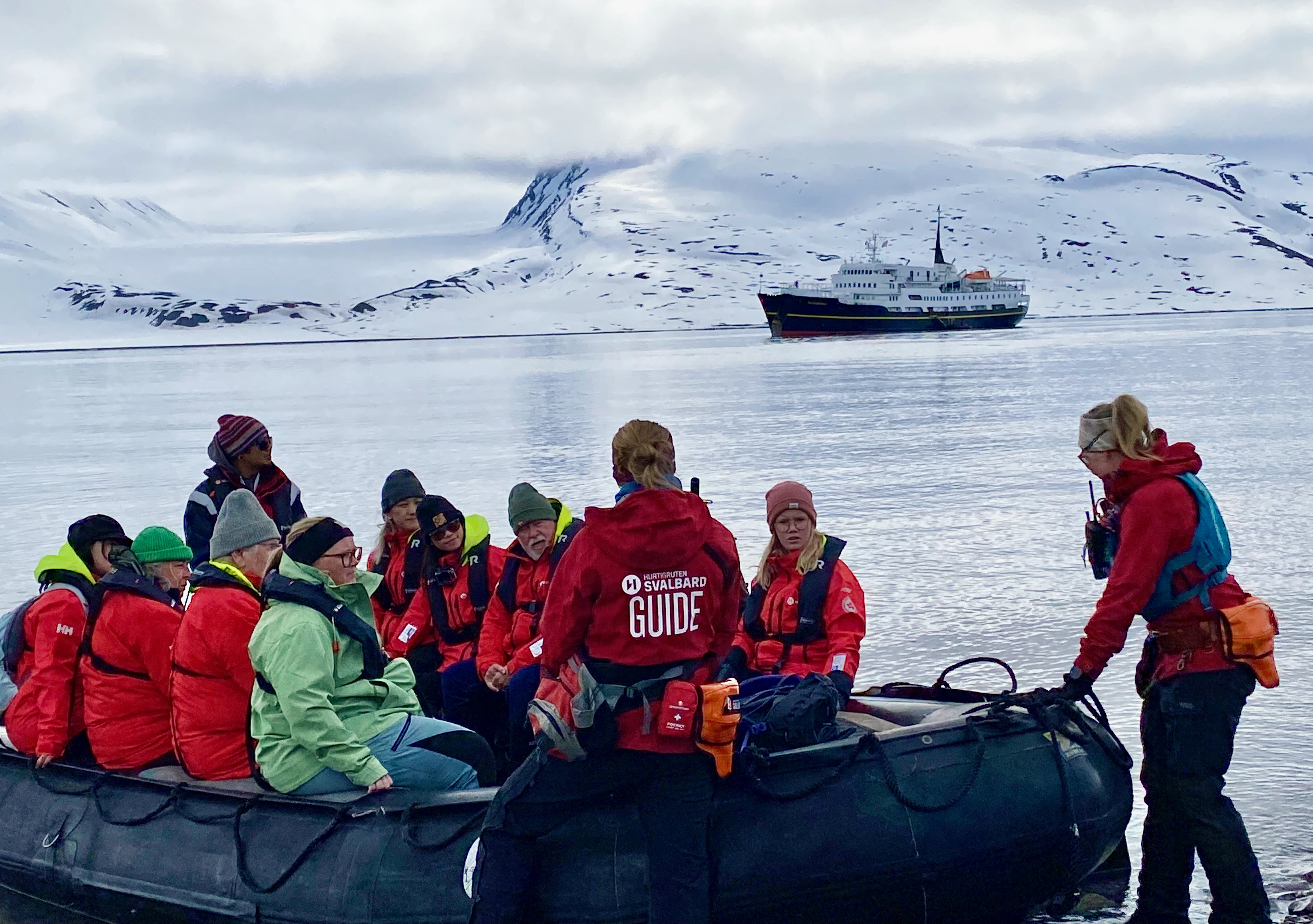
In fact, the two young women who are our guides on land are carrying both a scare gun and a rifle.

We sink into the snow and mud before walking on the rocks. It’s easy to imagine that twenty or maybe thirty years ago, everything was covered in snow.
During our climb to the summit, which is only a few kilometres away, our guides sometimes point out tiny flowers that have found their way through the rocks and moss. There’s an eight-petalled dryad, for example.
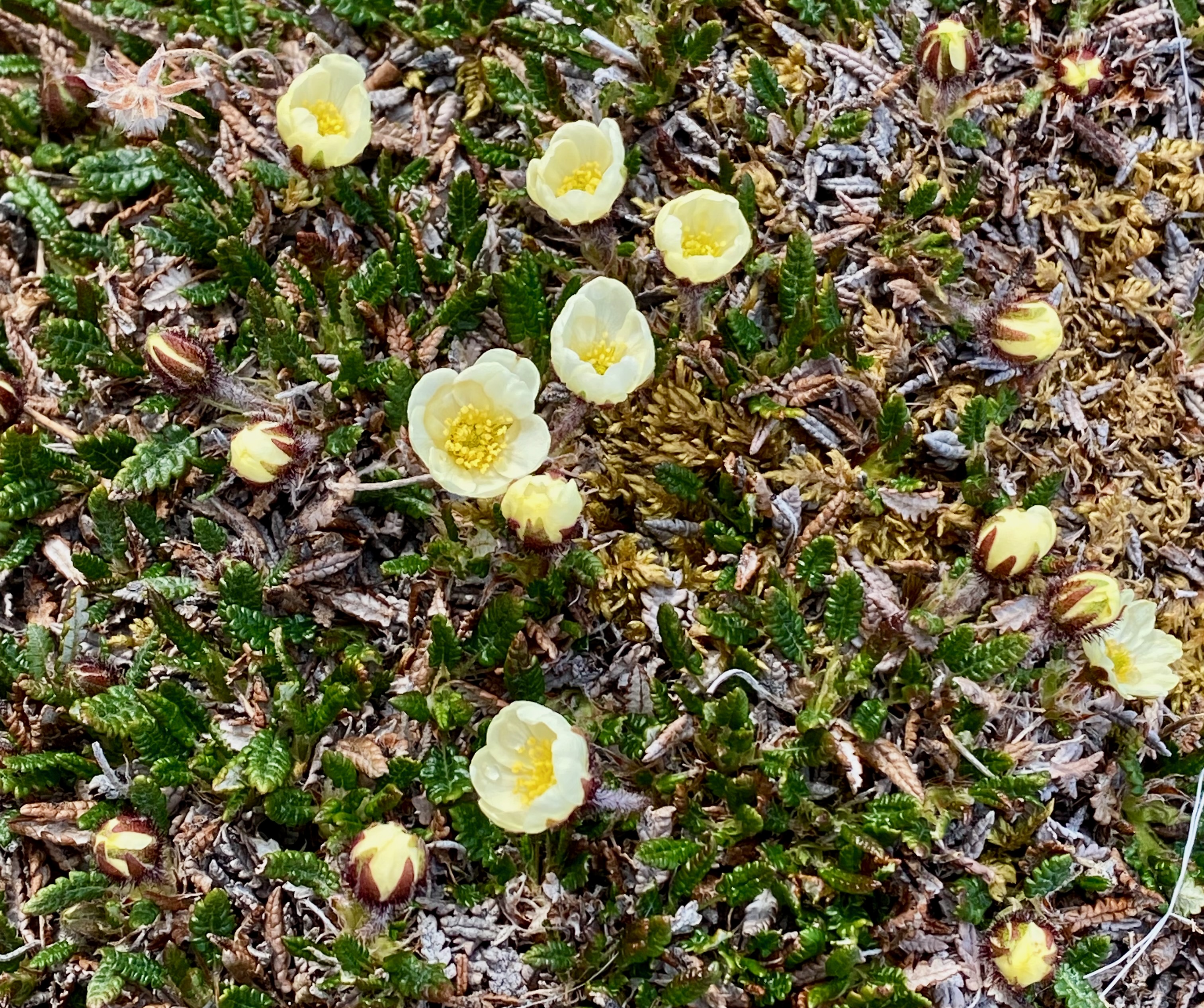
Or a saxifrage with opposite leaves. I’m showing off my knowledge, but I read the description in the guide’s guidebook.
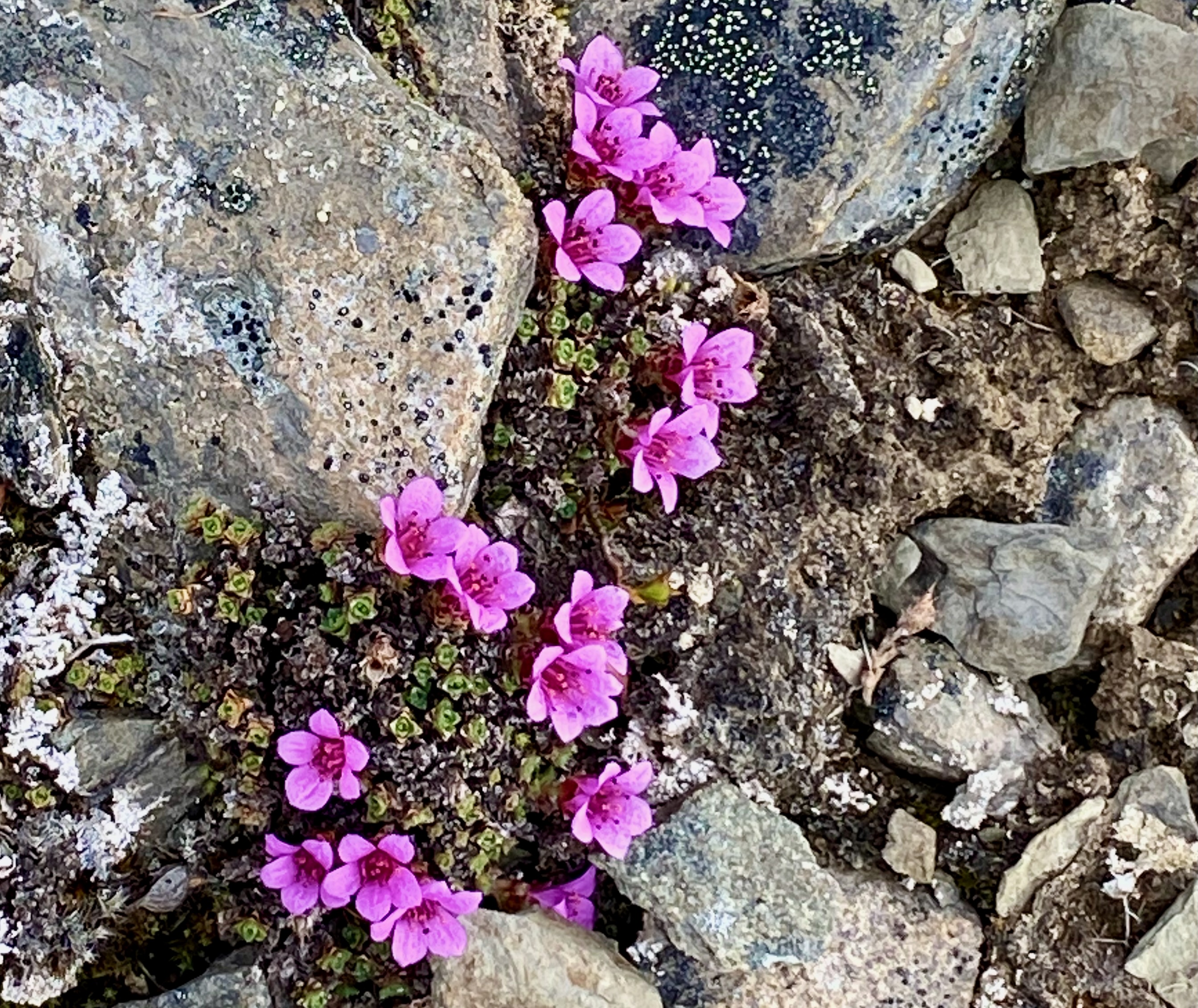
They also tell us the story of the first explorers and the Dutchman Barentz. They tell us that, in the old days, you could supposedly walk from one side of the fjord to the other by walking on the backs of whales. It’s a joke, of course, but it speaks volumes about the large number of cetaceans that used to be found in the area. Dutch and British explorers hunted and killed them at a rate of a thousand a year, it is said. First for their meat, and also for their oil.
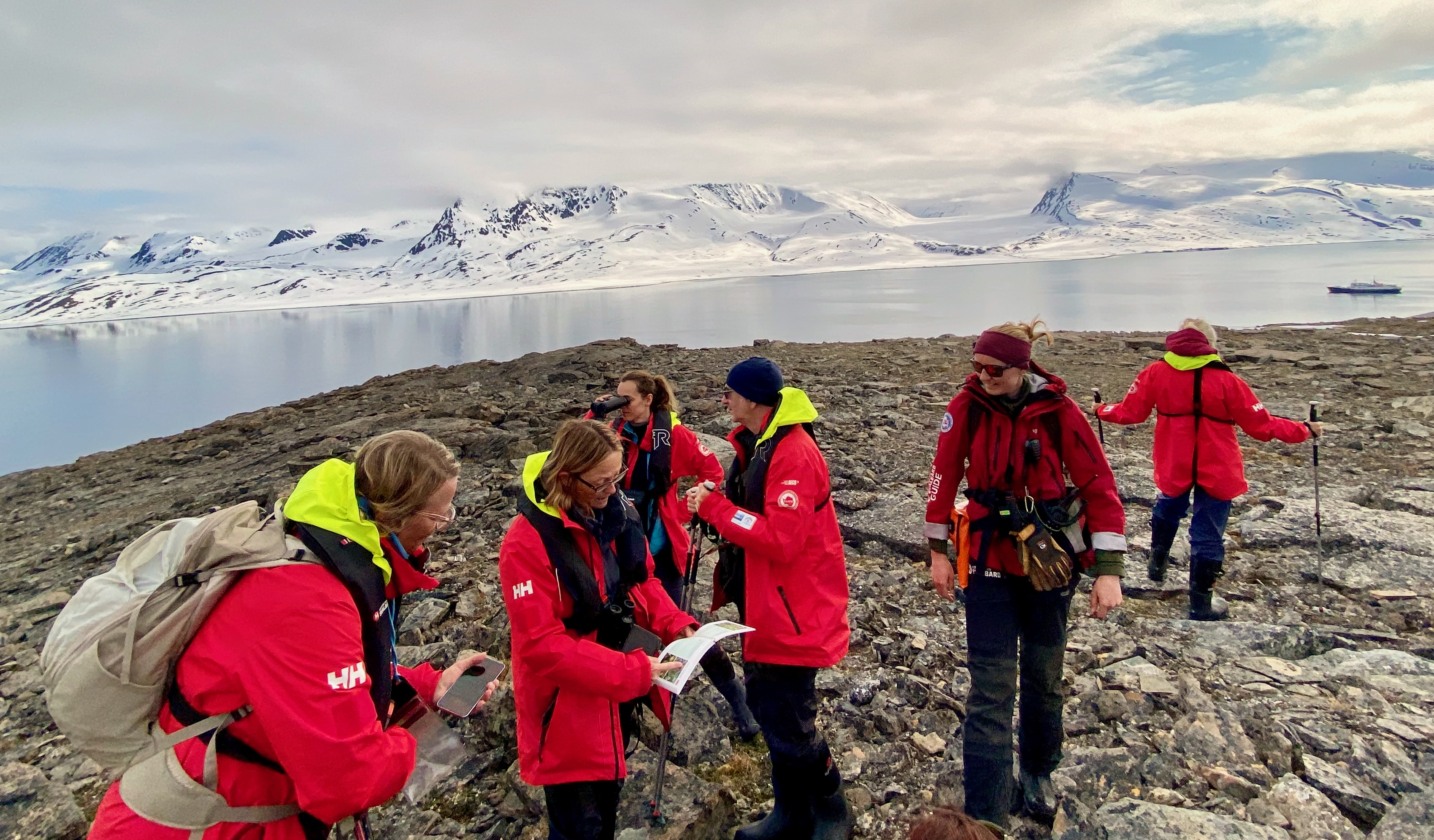
The whales disappeared like snow. Now, it is rare to see them.
HAMILTONBUKTA, JUNE 24 2025 – DAY 4 (afternoon)
Fantastic ! We are standing in front of a glacier, surrounded by icebergs that have broken off from it. On the nearby rocks, guillemots perform an astonishing ballet. A few black-legged kittiwakes are fighting each other in the water. This is the beauty of nature in its purest form.
We left the ship in a Zodiac to get closer to the glaciers at Hamiltonbukta, which are still in the « red fjord » (Raudfjorden).
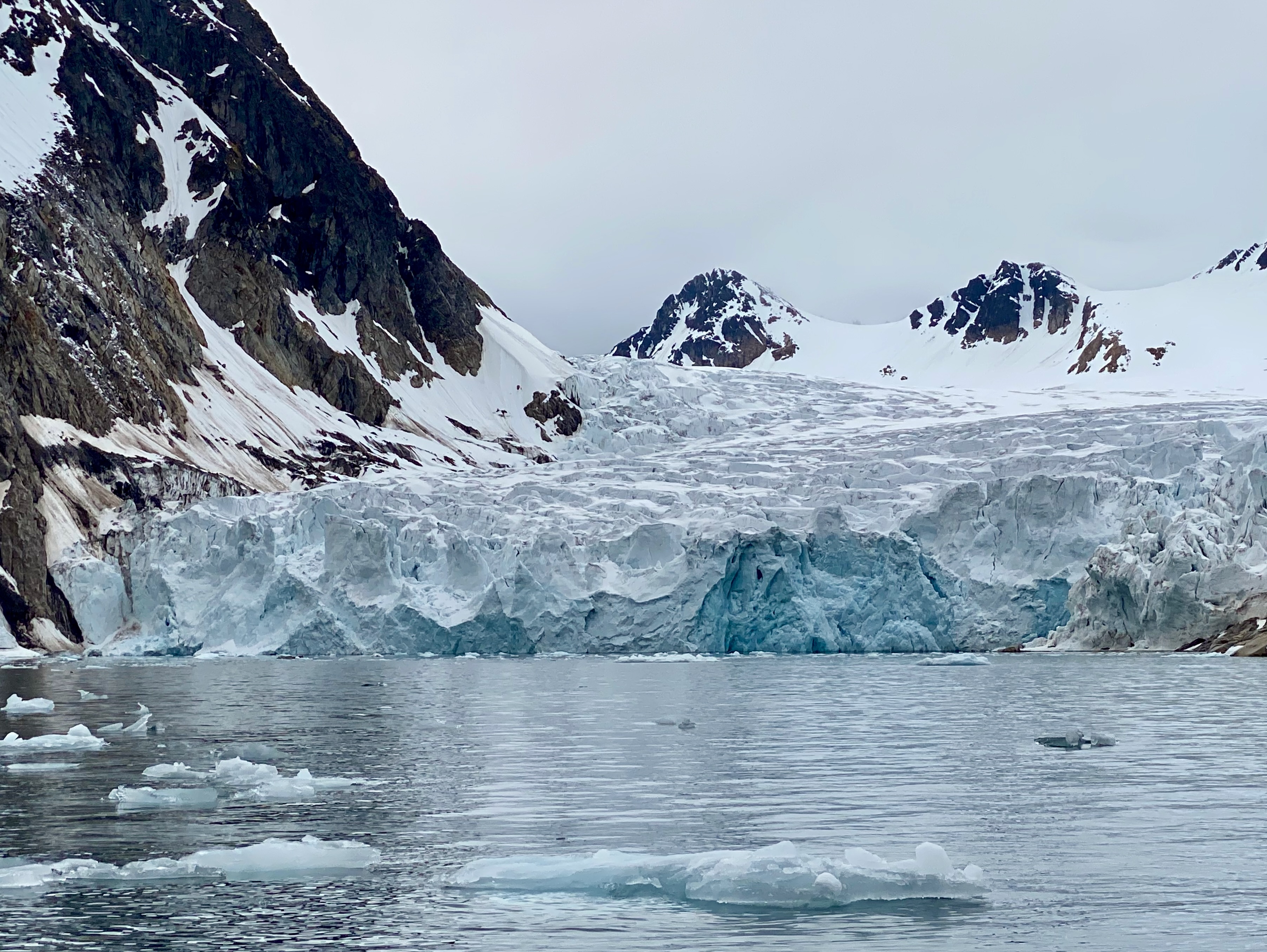
Stéphane, a guide from Geneva, is at the front of the Zodiac, telling us about the life of glaciers and, above all, their rapid disappearance over the years.
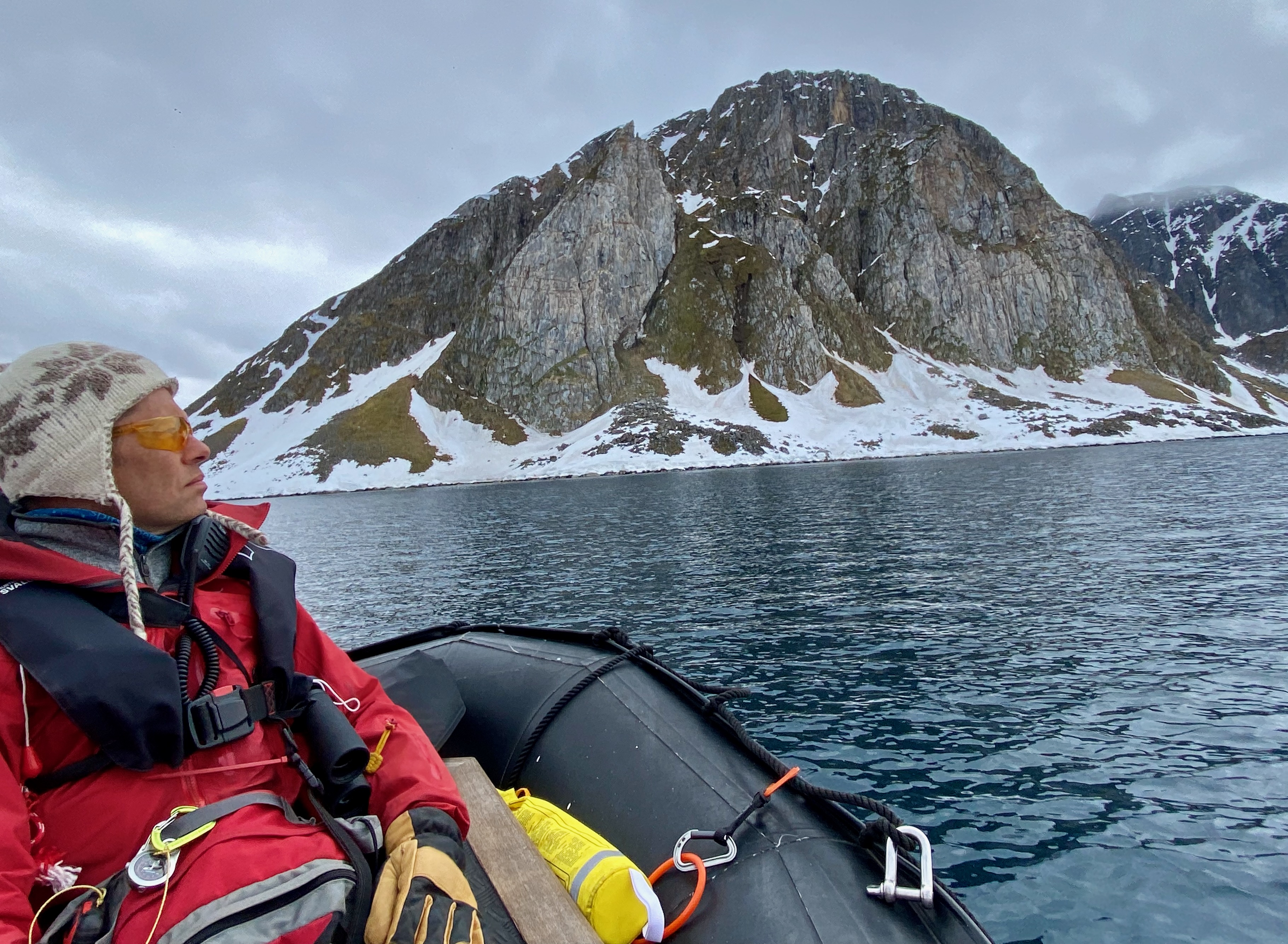
Dressed like explorers, ready to face the extreme cold, we wear several layers of clothing (the best system), big boots and Hurtigruten’s red and yellow windbreaker. However, except when the Zodiac picks up speed, we don’t feel the cold much.
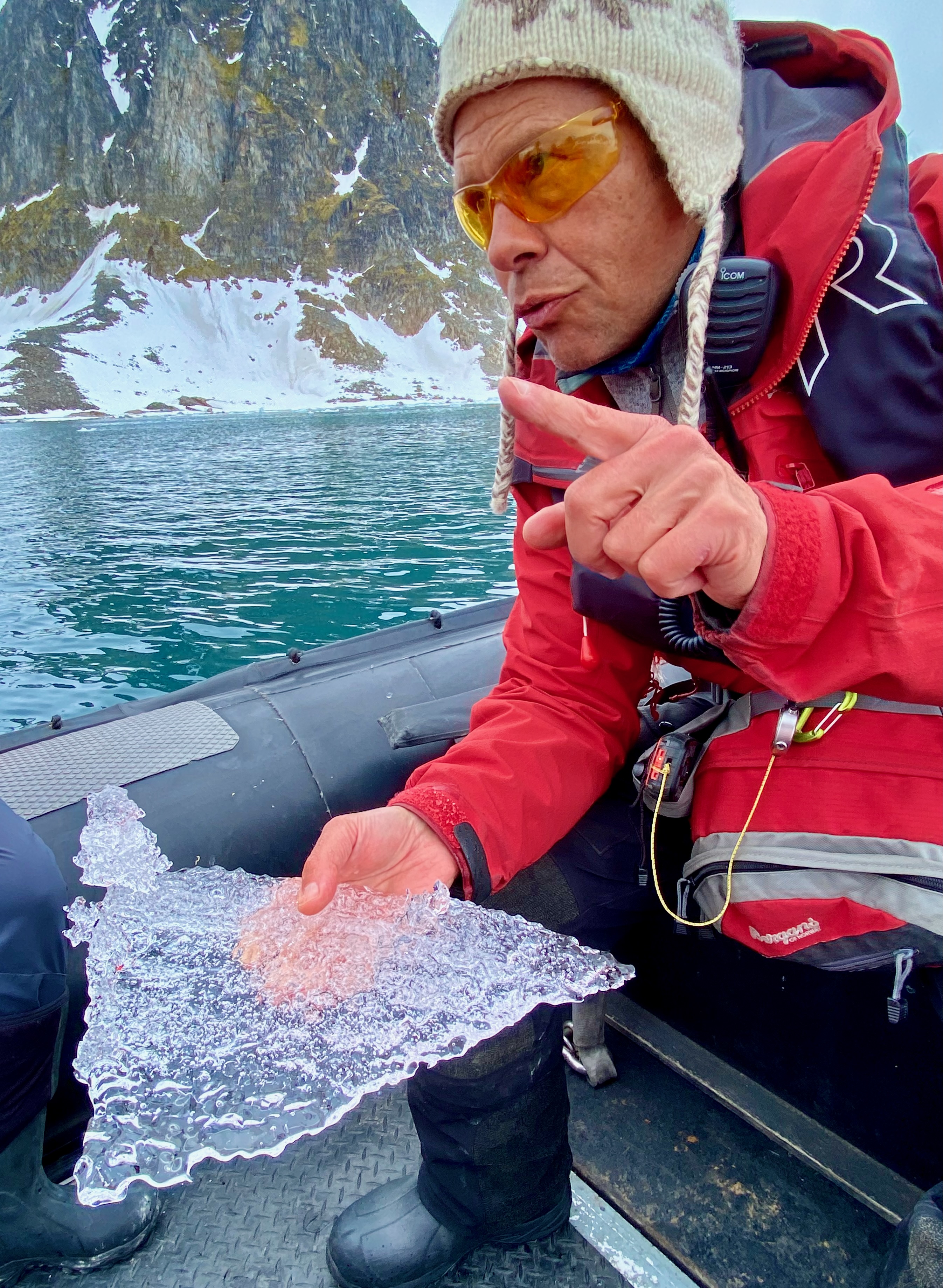
Stéphane has just picked up a piece of ice from the glacier and explains how bubbles are trapped in the ice and gradually explode.
After an hour and a quarter of exploring, we return to the boat and are greeted with hot waffles, which we top with cream and jam… and, for the brave among us, « brown cheese », which is only called cheese and tastes mainly of caramel. The good life!
All that remains is to rest, read and meditate in front of these stunning landscapes before the final attraction of the day: passing near Moffen Island. We will then be beyond the 80th parallel.
Anita and Marcel, two Bretons who are the only other French people on the trip, ask me as they see me typing on my computer:
- Do you have an internet connection ?
- No, of course not. Since the end of the first day, we have been cut off from all telephone and internet networks due to a lack of relays. This has forced us to take a break, which most of the passengers have welcomed (although I haven’t asked them all).
The ship’s crew have Wi-Fi, but it’s private. They have used this to tell me that in their village near Quimper, they are in almost the same situation. There is no telephone relay or internet, even though fibre optic broadband has been promised to them soon. They have found a solution in the form of Elon Musk’s Starlink network: an antenna costing around €100 and a monthly subscription of €40. It makes you wonder why Europe is not capable of such a feat.
It’s now 8:30 p.m., and we’re crossing the 80th parallel — the farthest north we’ll go on this trip. This is no mean feat: beyond this parallel, there is almost no land left on the planet. Just the top of ice-covered, uninhabited Greenland; the Russian archipelago of Franz Josef Land and Severnaya Zemlya; and Ellesmere Island in Canada.

The guides celebrate this milestone with us, providing orange juice and fake champagne. Very nice.
At the same time, we discover Mofen Island and, most impressively, a large colony of walruses. There are more than sixty of them, as far as we can see with our binoculars. Unfortunately, no photos are possible as we have to stay at least 300 metres away.
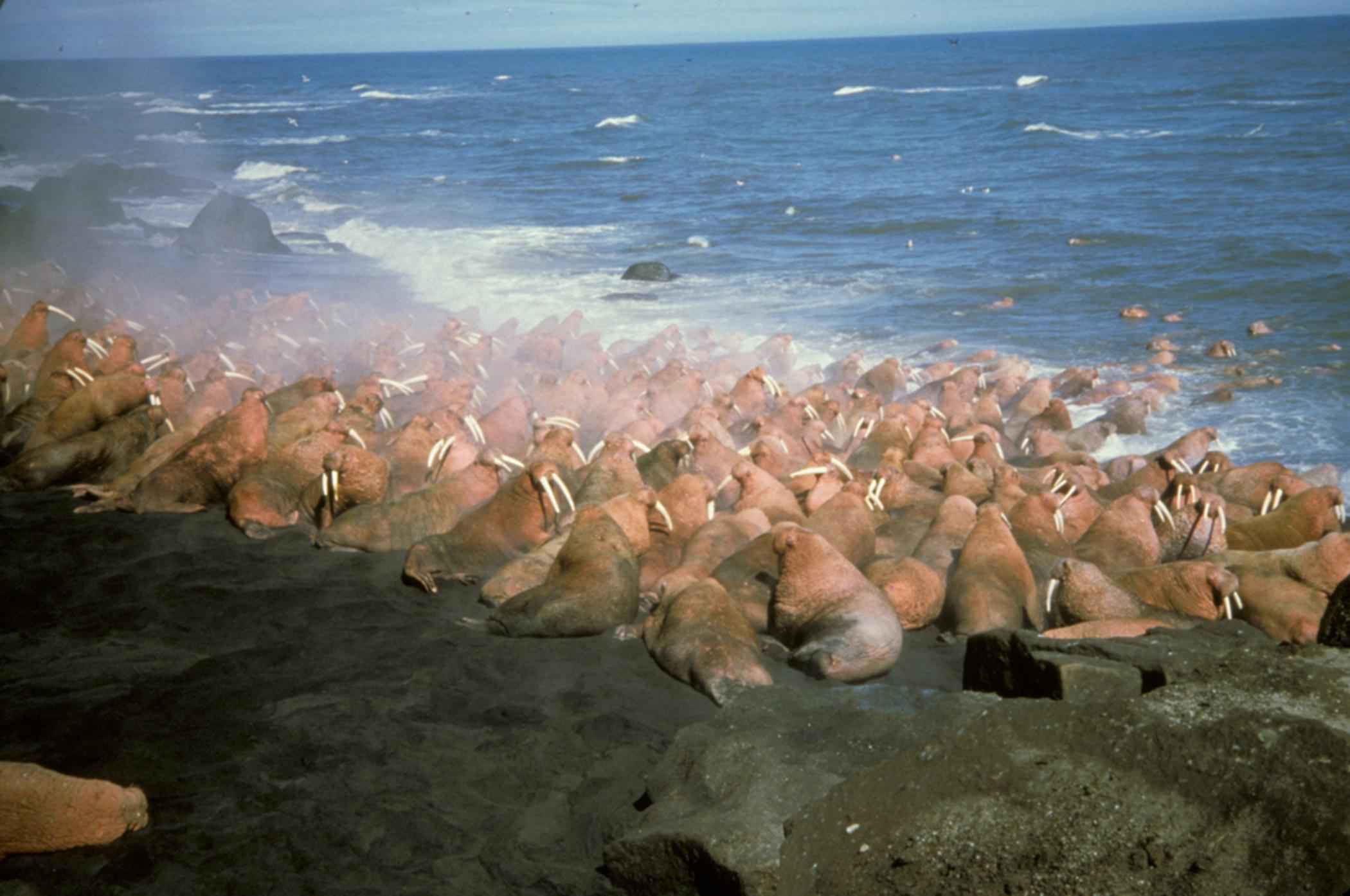
This photo, taken by the U.S. Fish and Wildlife Service, shows what we saw.
This sandy islet is a sanctuary for nesting birds. Svenia and Stéphane give us an interesting lesson: the walrus, which weighs over a tonne, is content with a daily diet of around sixty kilograms of crustaceans and sea cucumbers. It dives up to fifty metres to feed. After this gargantuan meal, it can sleep for several days, no doubt to digest it all.
The walrus was long hunted for its blubber, tusks and thick skin, and nearly disappeared from the area as a result. However, it has been protected since the early 20th century, and the North Atlantic population is slowly growing again.
At around 1 a.m., we enter the La Madeleine fjord. About ten of us stayed up late to enjoy the view. An icy wind blows across the deck and it is snowing. In the distance, near the coast, we can see a small boat and a red tent on the side of the fjord. Who could be camping there? Scientists? This question doesn’t stop me finally going to bed at 2 a.m.
CAMP ZOÉ, JUNE 25, 2025 – DAY 5
In Svalbard, nature reigns supreme. This morning, we woke up with the Lilliehöök glacier in front of us.

After breakfast, we walked around a huge rock that is home to many birds. We spent a long time watching them through our binoculars.

We also entered the realm of the infinitely small. As we quickly realised that we would probably not see any large animals—let alone polar bears—we were very happy to see walruses last night and lots of Arctic reindeer with their young recently. In the absence of large animals, we devoted ourselves to the small world. Firstly, there are the tiny flowers that defy the climate and permafrost, returning every spring.
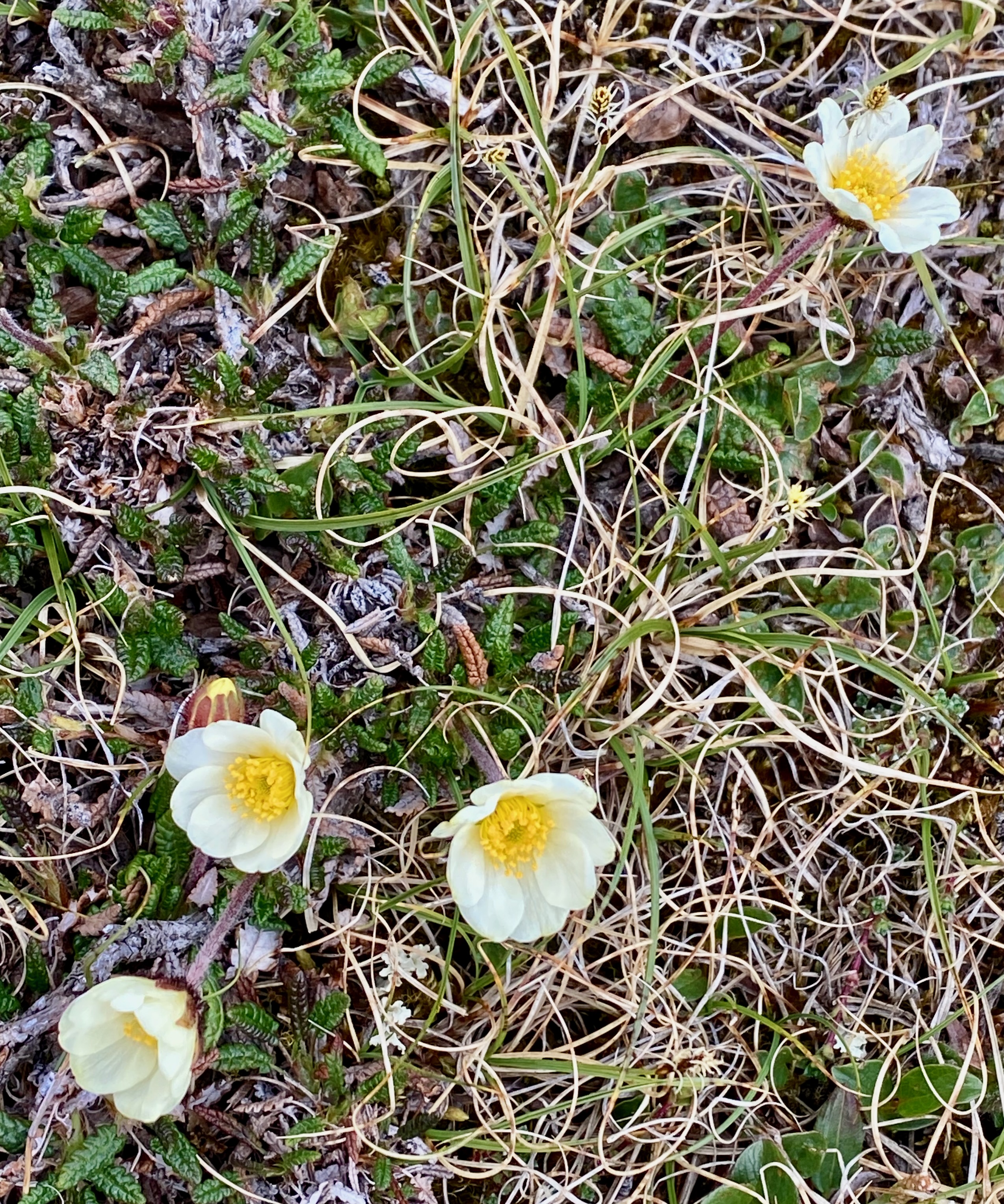
Since then, we have been walking with our eyes on the ground during our hikes, both to avoid falling on rocks and, above all, to avoid stepping on the polar flowers.

Then there are the droppings to watch out for. Stéphane, a very friendly Swiss guide, showed us a variety of them collected from the same spot: Arctic fox droppings, small reindeer droppings in winter and large reindeer droppings in summer. As an added bonus, there’s seagull poo too. I’ll spare you the photo.
As we go on our outings, we become aware of the richness of nature and the importance of preserving it. I don’t think there are many places in the world where you can feel the impact of climate change so keenly.
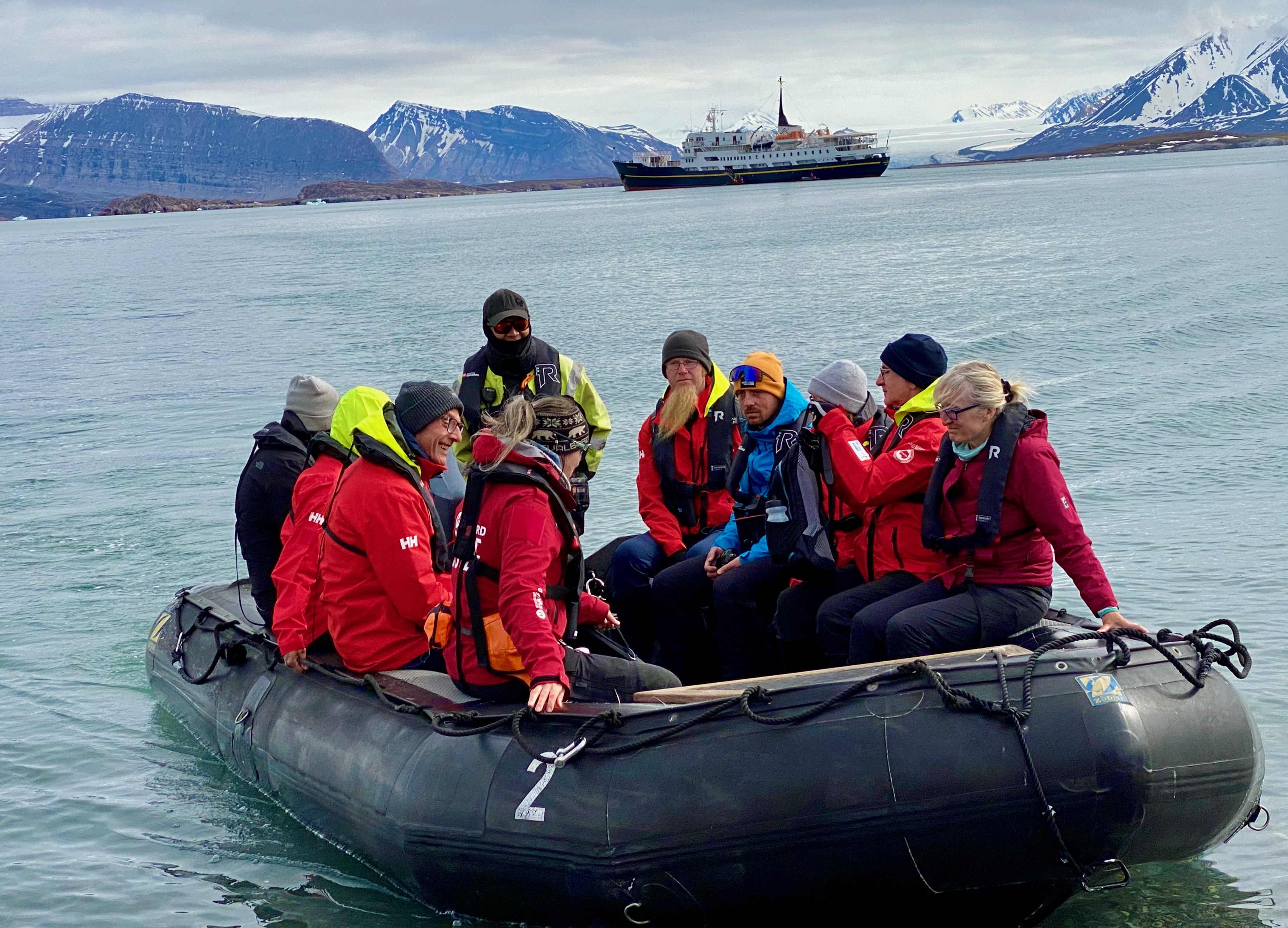
This morning, as has become our habit, we took the Zodiac to a pebble beach. We put on our life jackets and climbed in and out of the Zodiac safely. It’s all part of the adventure!
So, what is Camp Zoe? It’s just a concession that was established by the British in 1905. At the time, Svalbard was rather like the Wild West. Anyone who landed there could claim a large area of land for themselves.
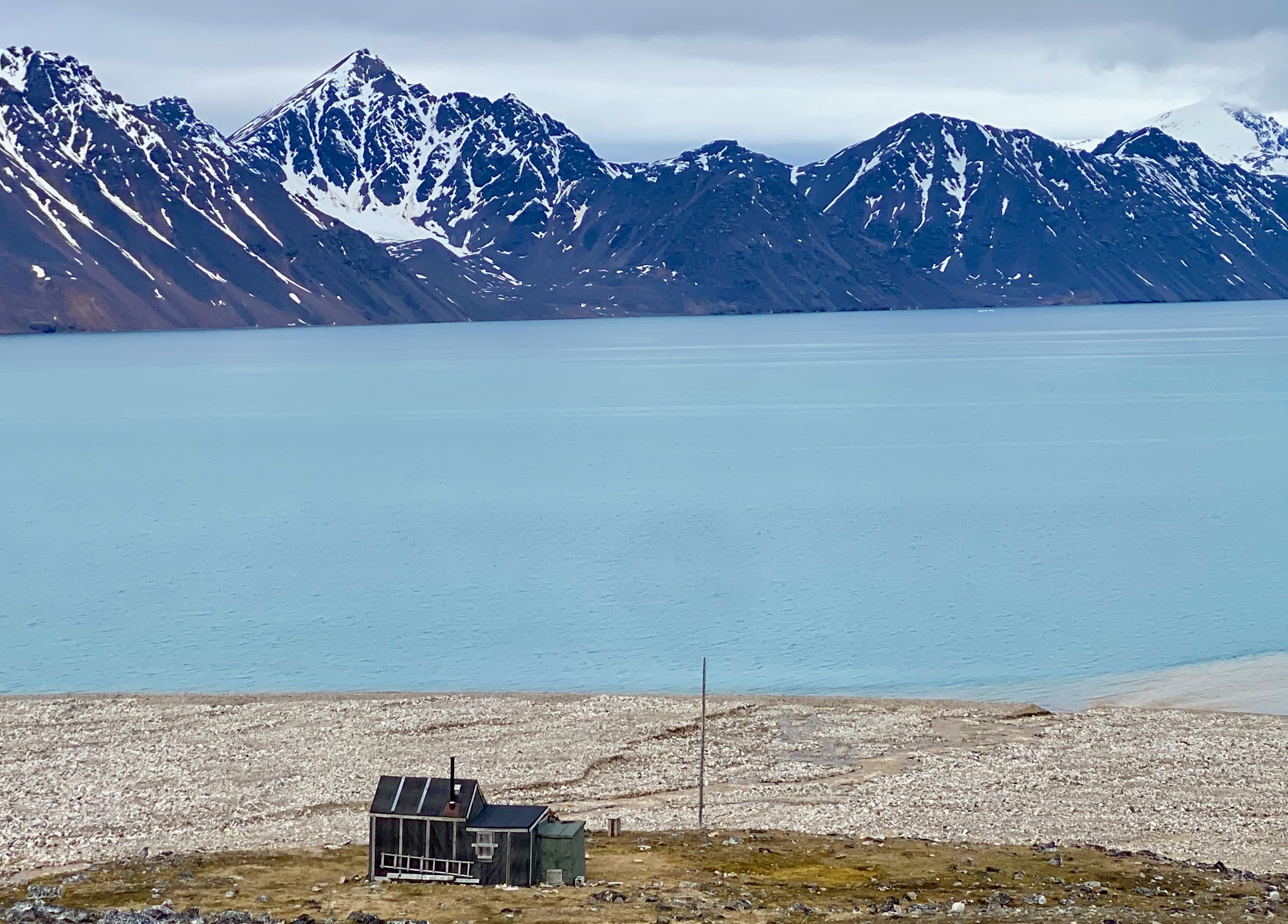
This undoubtedly led to endless conflicts that had to be settled with shotguns or lawsuits. At the same time, anything that moved and could be sold was shot. For example, Arctic fox fur was used in women’s fashion.
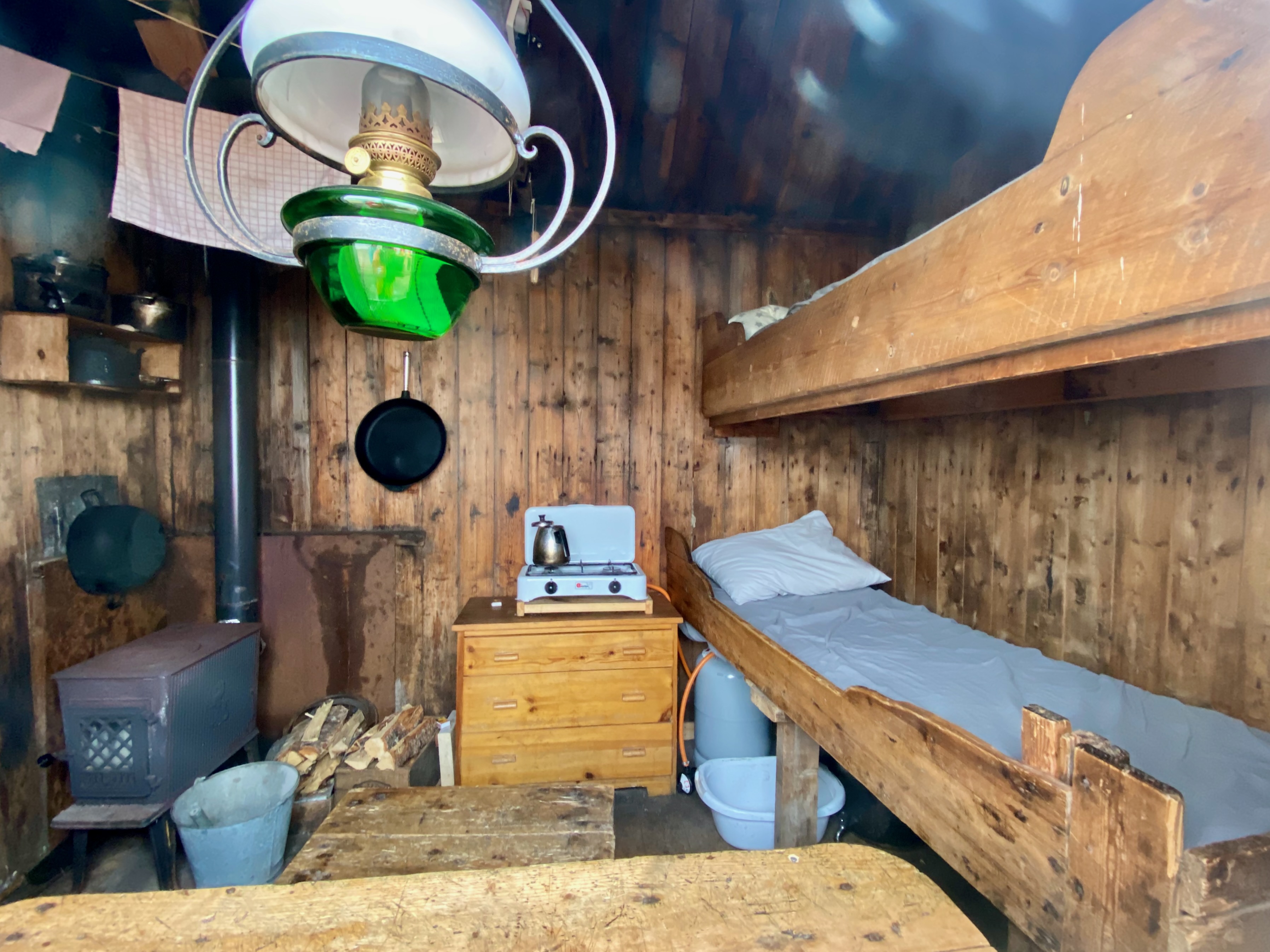
Inside the Camp Zoé cabin
After the First World War, international authorities sorted everything out and entrusted Norway with the management and ownership of Svalbard.
Before returning to the Zodiac, the more daring among us can take a dip in the Arctic Ocean, where the water temperature is 3°C. Rather than swimming, it’s a quick dip before wrapping yourself in large towels.

After our short night, I couldn’t bring myself to join the bravest among us. As they entered the water, they admitted that it took their breath away!
NY LONDON, JUNE 25, 2025 – DAY 5 (continued)
We are going to Ny-London this afternoon, but it’s a scam. In 1911, a prospector named Ernest Manfield thought he had found Peru. On the Bloomstrandøya peninsula, he found marble that was said to be the purest in the world. At least, that’s what he managed to convince British investors of.
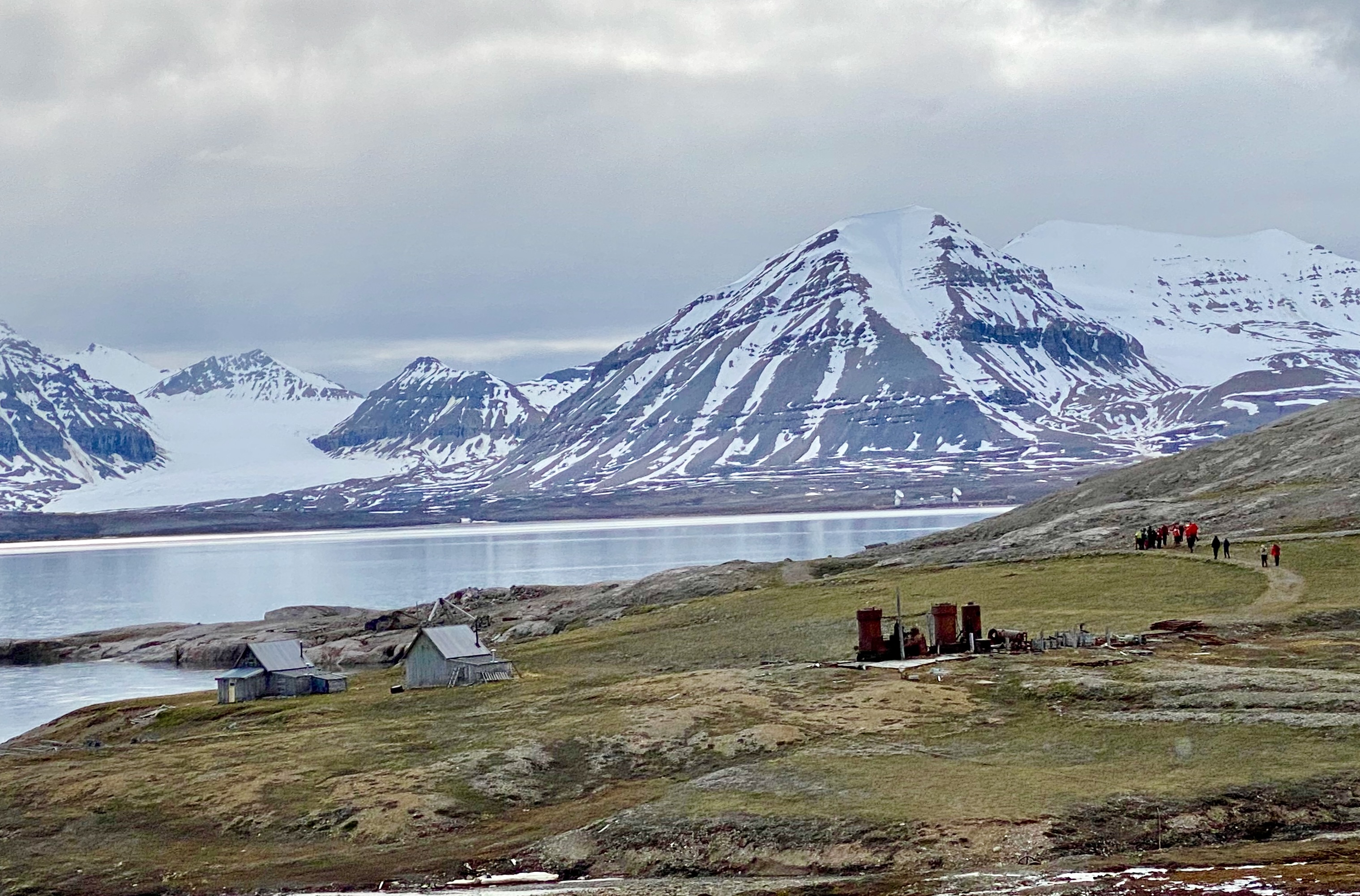
The funds raised was used to establish a complete mining infrastructure. Mining began in 1912. However, disaster struck when it was found that the Svalbard marble could not withstand the warmer temperatures of continental Europe and began to crumble. The mine closed during the First World War, reopened briefly and then closed permanently in 1920.

The only remains from this period are a steam engine, a landing crane and a few huts. Other huts were dismantled to provide wood for Ny-Alesund, the town located just opposite.
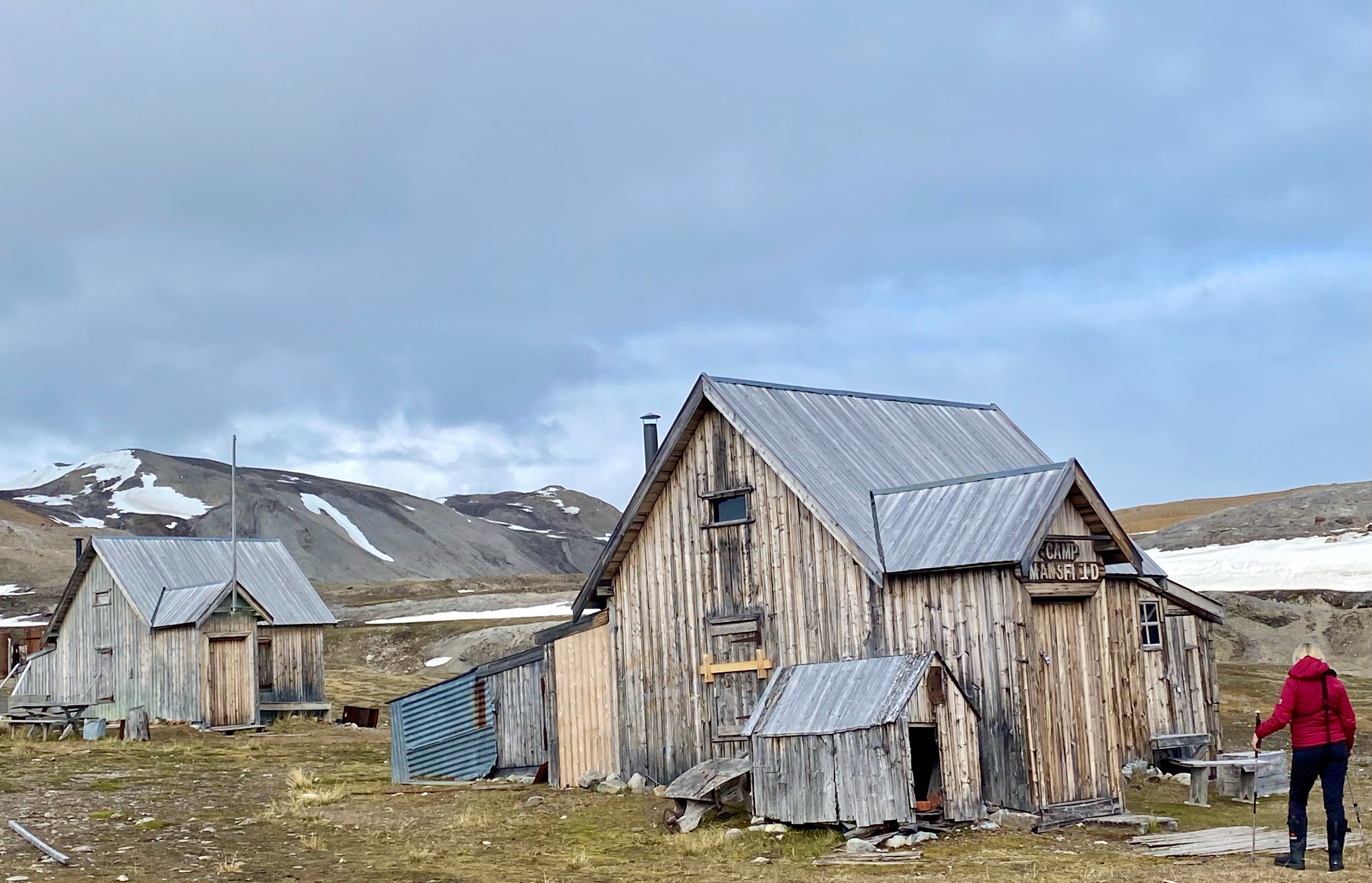
Nevertheless, naming this settlement ‘New London’ was rather pretentious.
On the subject of names, Bloomstrandøya means ‘flower beach’ in Dutch. However, this is misleading as the place was actually named after its discoverer, the Dutch biologist Christian Wilhelm Broomstrand.
The second thing we learnt from our guides was that the original peninsula has become an island. This is simply because the glacier that connected it to the mainland melted at the beginning of the 20th century. The effects of global warming can be observed here on a daily basis.
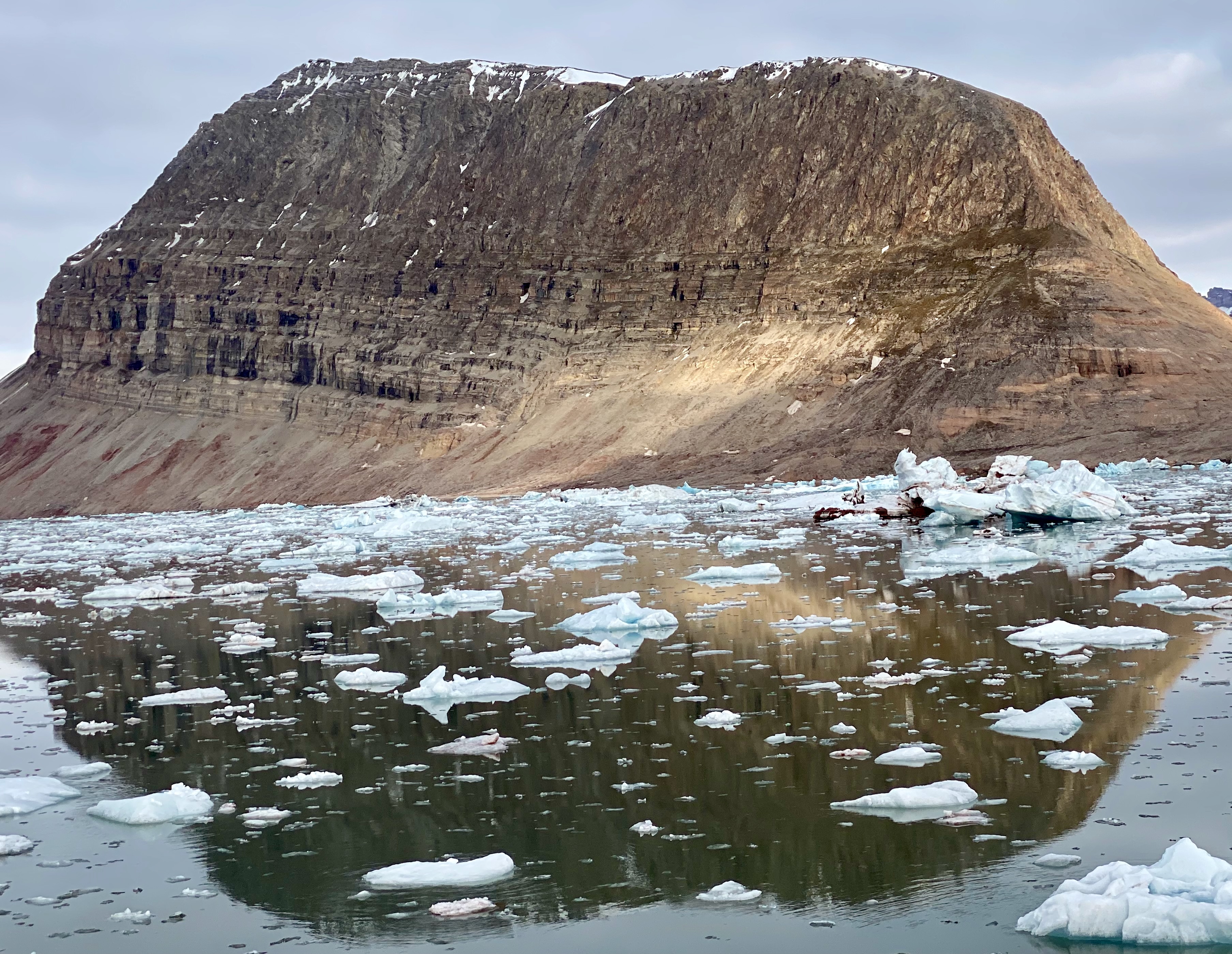
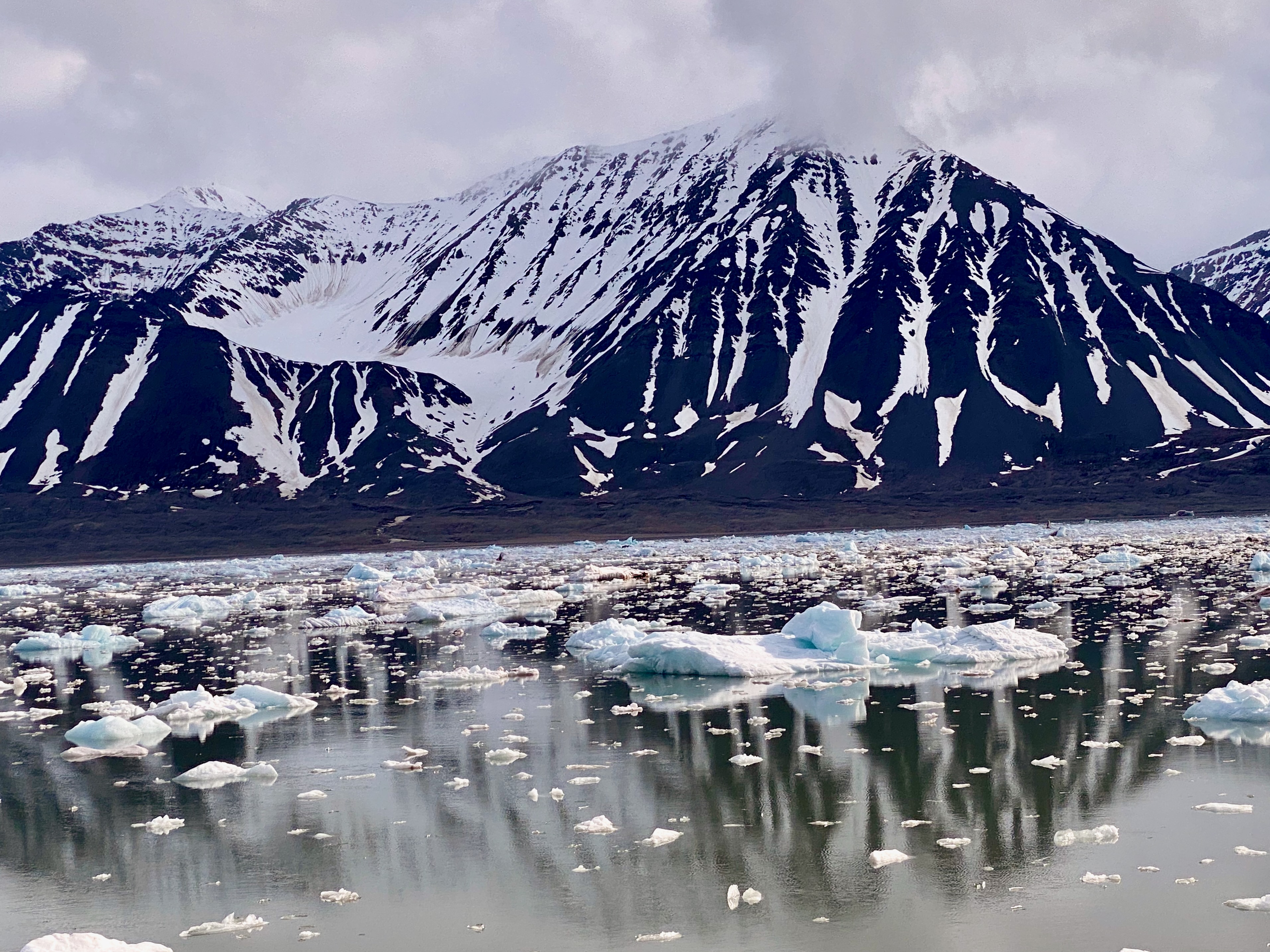
To reach our final destination of the day, Ny-Ålesund, the Serenissima navigates through the ice.
NY-ÅLESUND, JUNE 25, 2025 – DAY 5 (continued and end).
In my opinion, this is the strangest part of the trip so far, although there has been no shortage of strangeness.
This evening, after dinner, we disembarked at Ny-Ålesund. Known as ‘New Ålesund’ even when this community consisted of just thirty or so barracks and huts, it seems very strange at first compared to Ålesund, the art deco capital of Norway.
The history is strange, too, and explains the name. In 1916, four partners began digging into the surrounding hills to extract coal. They registered their company, Kings Bay Kull Compani AS, in Ålesund on the mainland. In Svalbard, the site naturally took the name Ny-Ålesund, and a few years later the company became the property of the Norwegian government.
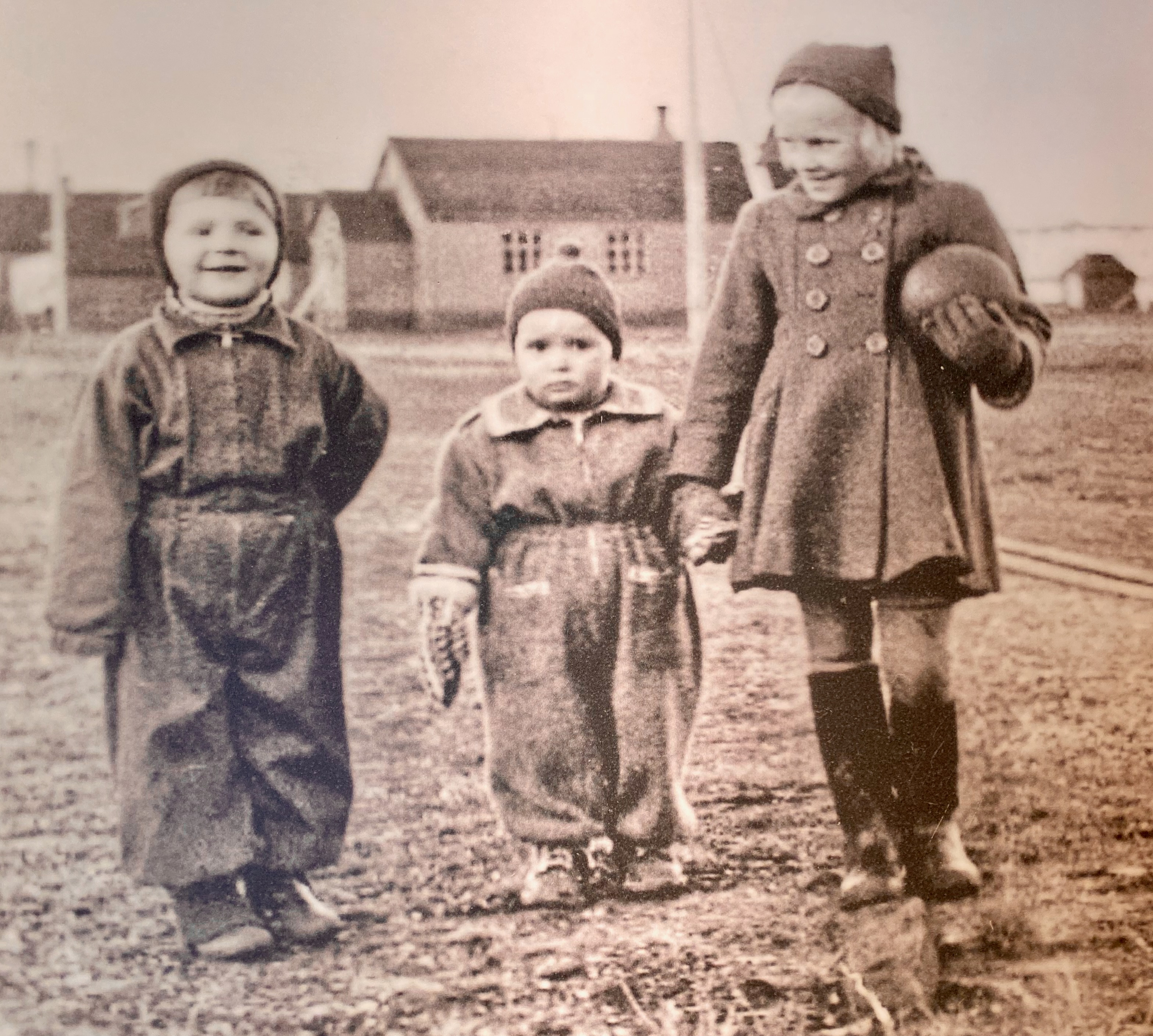
Children in Ny-Ålesund during the mining era (photo on display at the museum).
In 1962, an explosion killed 21 miners. This incident became known as the Kings Bay Affair, leading to the downfall of Einar Gerhardsen’s Norwegian government.
The mine closed. A few guards remained to watch over the facilities in the hope that operations would resume under safer conditions. Their hopes were in vain.
In 1966, the first scientists arrived with the Norwegian Polar Institute. Others quickly followed. Since then, there have been around thirty scientists during the winter and around two hundred during the summer. They represent at least a dozen nationalities.
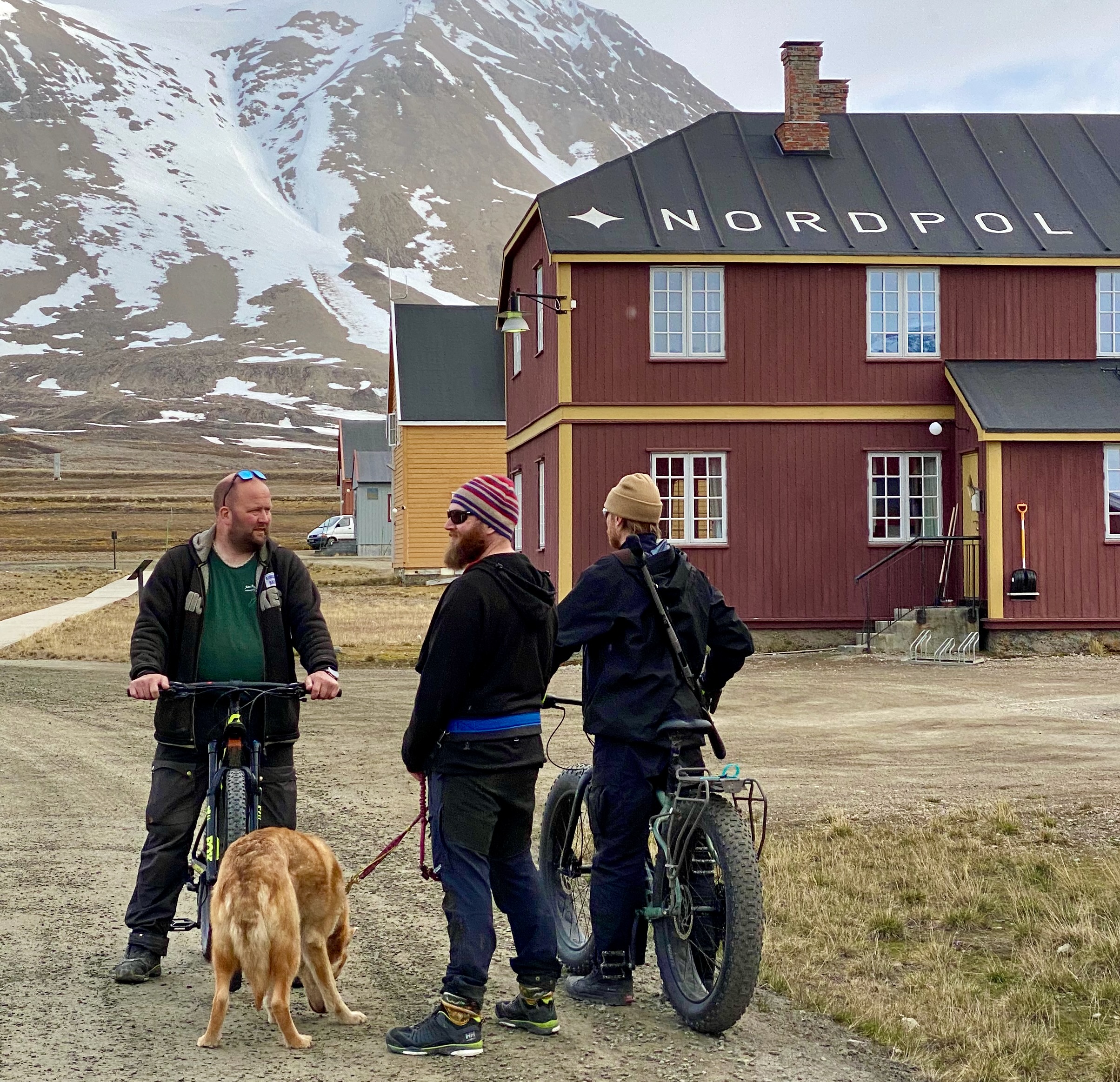
This is a photo of residents of Ny-Ålesund (note the rifle on the shoulder of the man on the right).
Research is conducted in Ny-Ålesund on just about everything: weather, geology, the atmosphere, biology and marine biology.
Ny-Ålesund is not a real town, as you realise when you arrive. It is a research station spread out along two roads, with purely functional buildings.
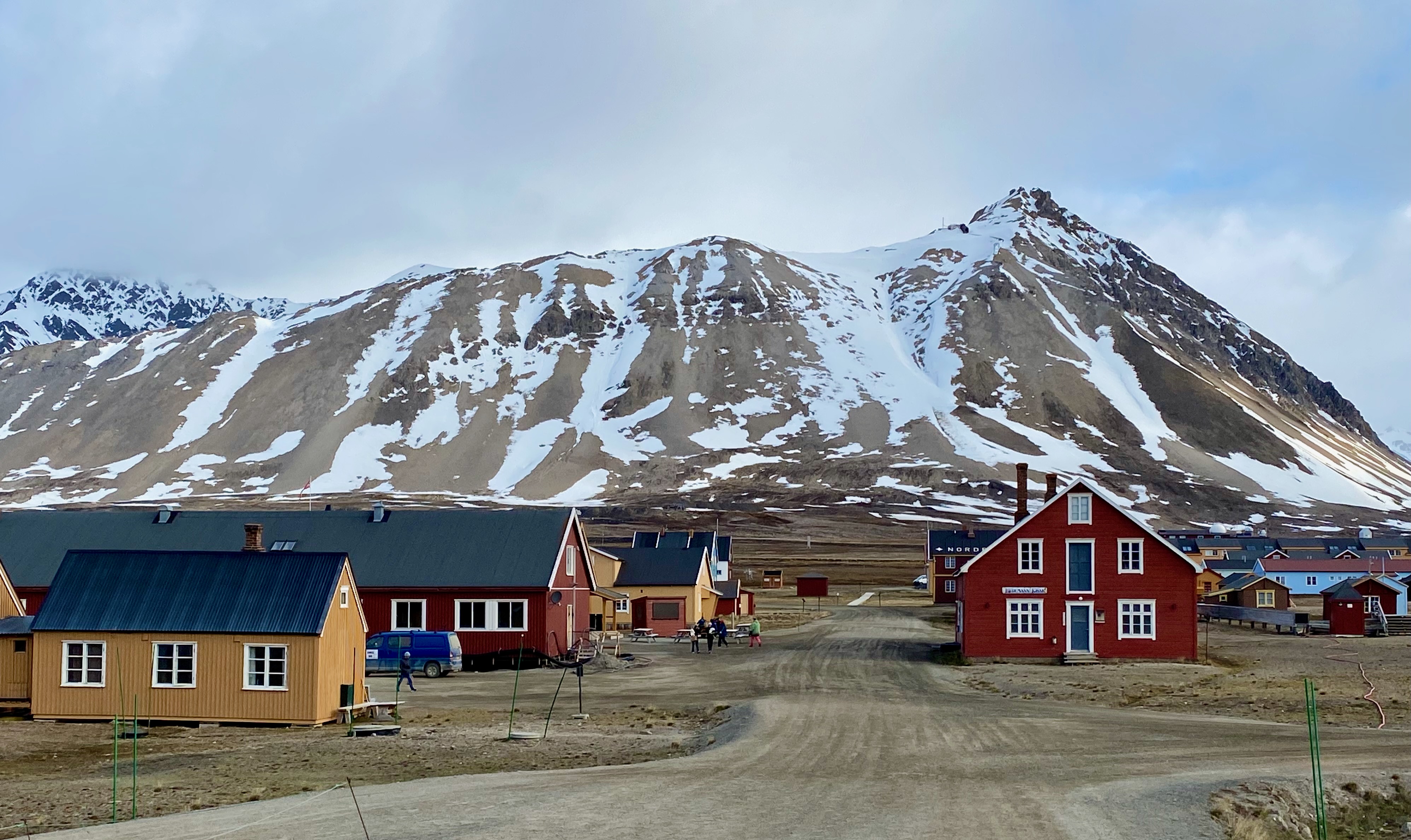
The entire town is actually owned by the Ministry of Climate and Environment, and it is not recognised as a municipality by the Norwegian government — another oddity.
Ny-Ålesund prides itself on being the world’s northernmost inhabited village, home to the world’s northernmost post office, airport and railway (which is no longer in operation).

A café, a souvenir shop that doubles as a post office, a laundrette, a sports hall and a museum complete the picture.
The museum recounts the history of the town, which is closely linked to that of the mine. It pays homage to Roald Amundsen, the great Norwegian hero. After becoming the first person to reach the South Pole, he set off from Ny-Ålesund with an American sponsor and an Italian named Nobile, who had built the airship that would take them to the North Pole.
The large hangar housing the aircraft, called the Norge, was the world’s largest wooden building at the time. It was dismantled so that the wood could be reused. The only remaining reminder of this epic adventure is the launch tower where the balloon was attached.
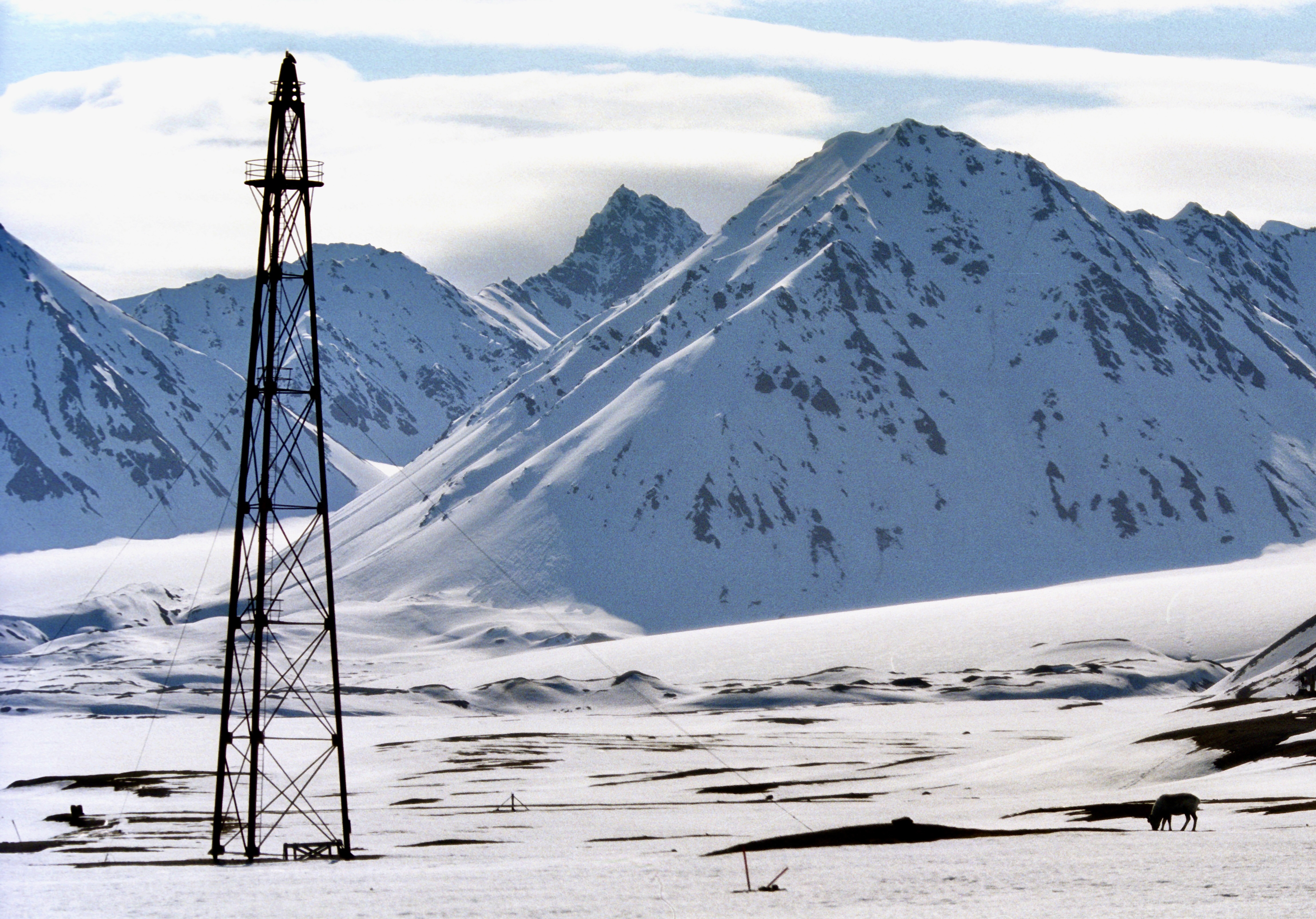
Photo: Jerzy Strzelecki
A few years later, it was from Ny-Ålesund that Amundsen set off to rescue Nobile’s Italian crew, who had been stranded in the Arctic. Amundsen never returned. His statue marks the intersection of the two roads in Ny-Ålesund.
LONGYEARBYEN, JUNE 26, 2025 – DAY 6
Goodbye, Serenissima. I’m already feeling a little sad about leaving you, even though we’ve only known each other for a few days. It’s been too short for my liking. I would have liked to stay another day or two.
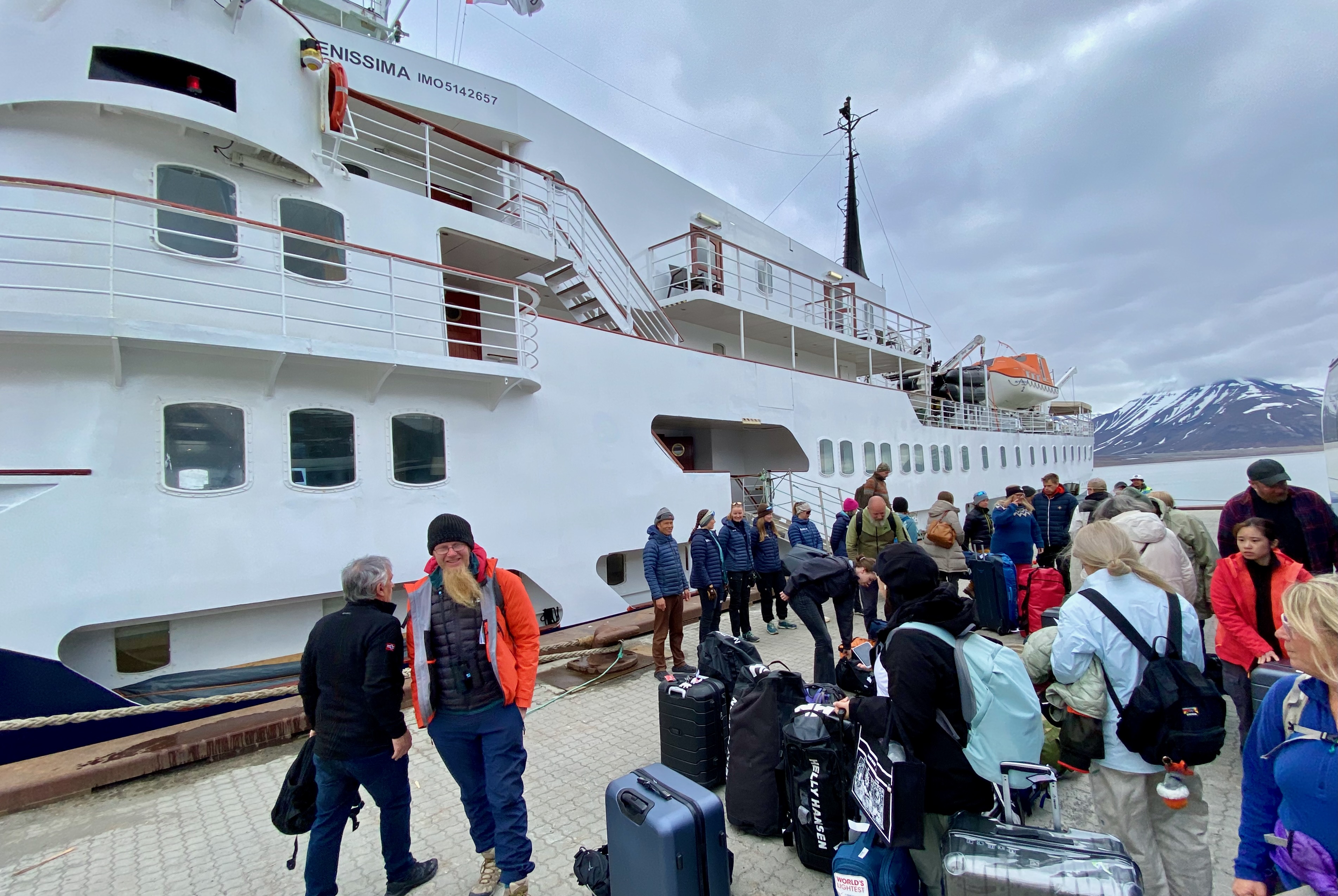
The crew bids us farewell. Not just the guides, but also the service staff, the cooks, the pilots, the mechanics and the maintenance men.
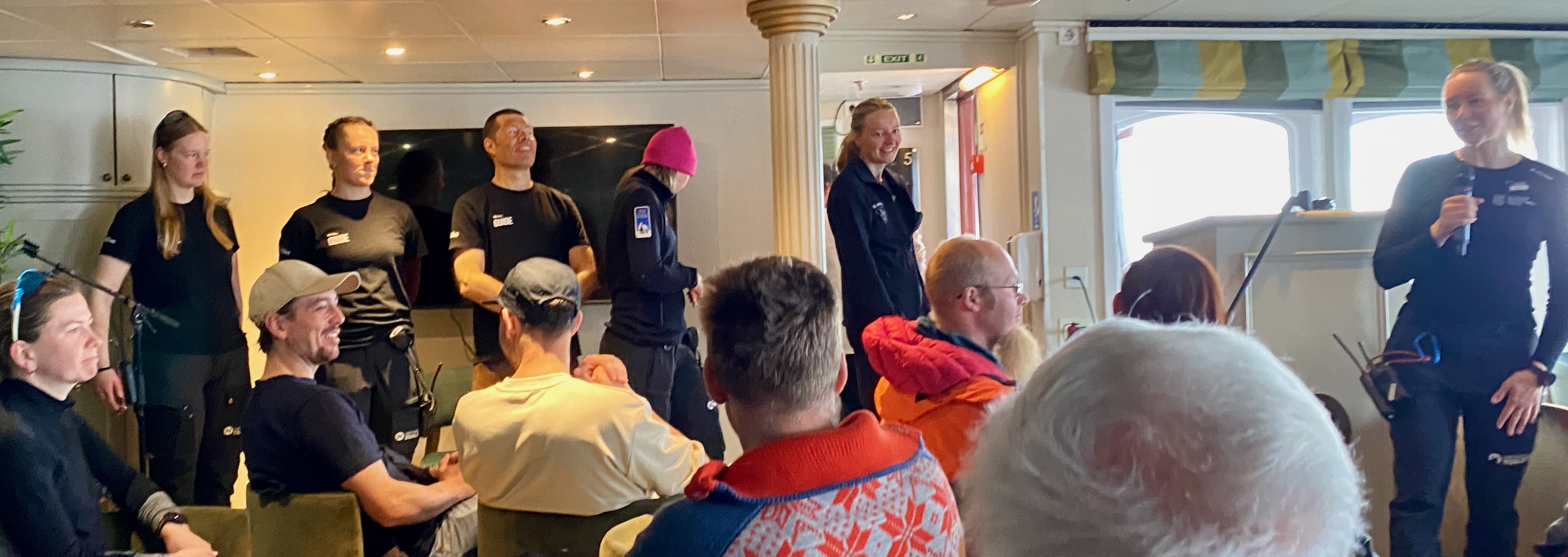
The guides recap the highlights of the trip (in case anyone is already suffering from Alzheimer’s), hand out certificates, and finish by singing. They were great — nothing more to say. Unlike the travellers from the previous week, we didn’t see any polar bears, but in the end, that wasn’t the most important thing.
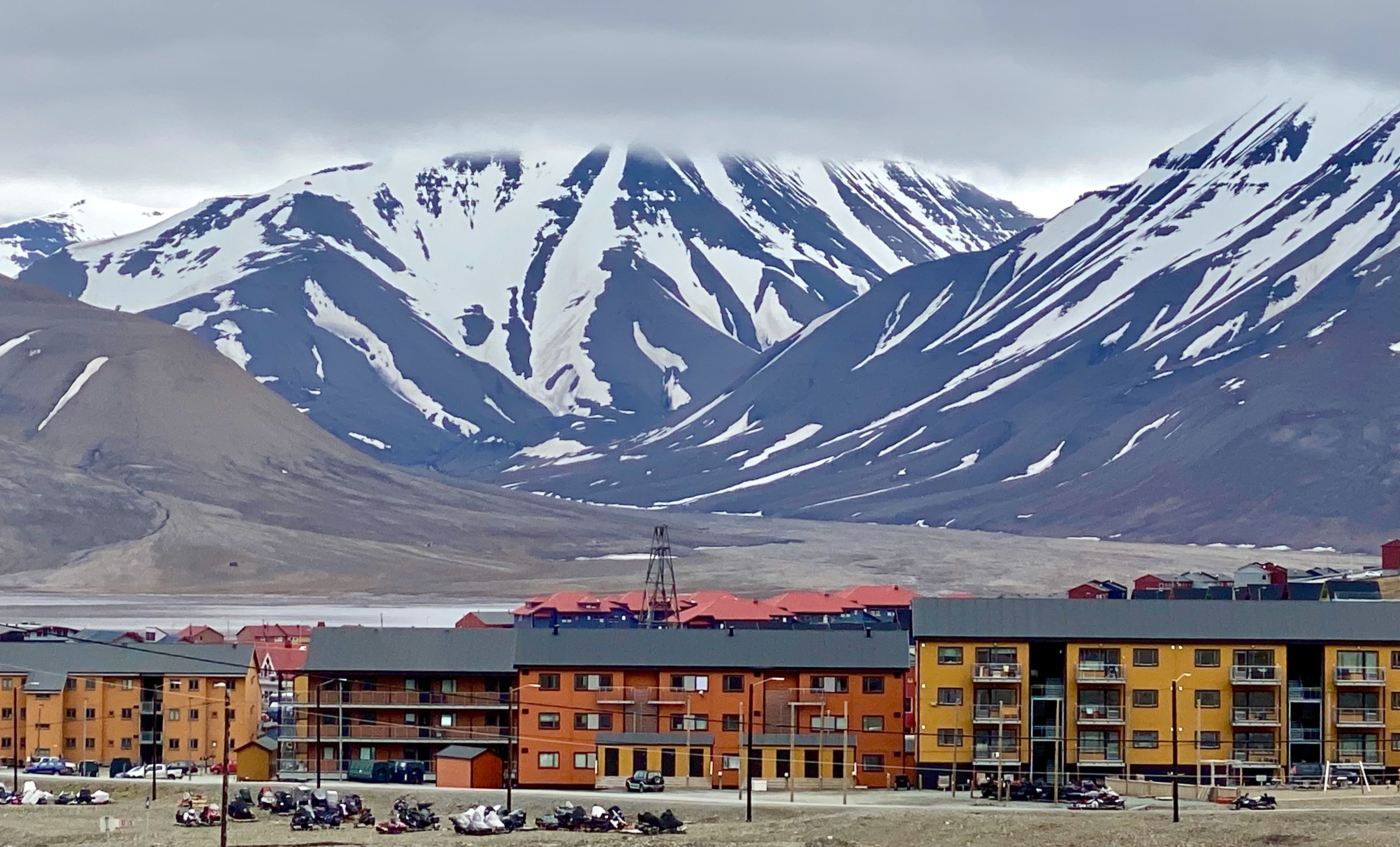
We return to Longyearbyen with a different perspective. A few days ago, the town seemed to be at the end of the world, in the middle of nowhere. Today, I’m surprised to see cars passing by — everything is different.
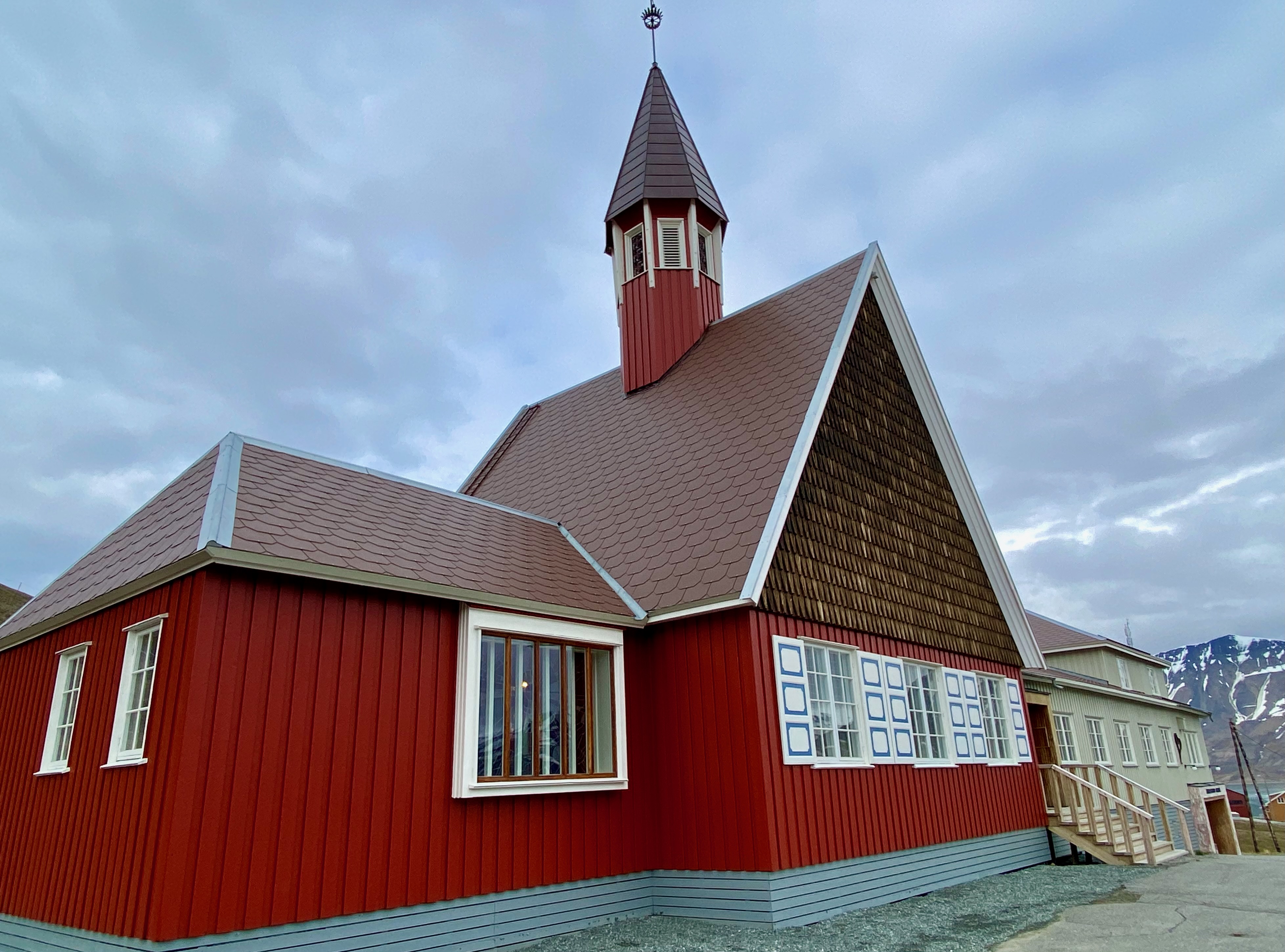
I take the opportunity to walk up to the old town, where the church is located.
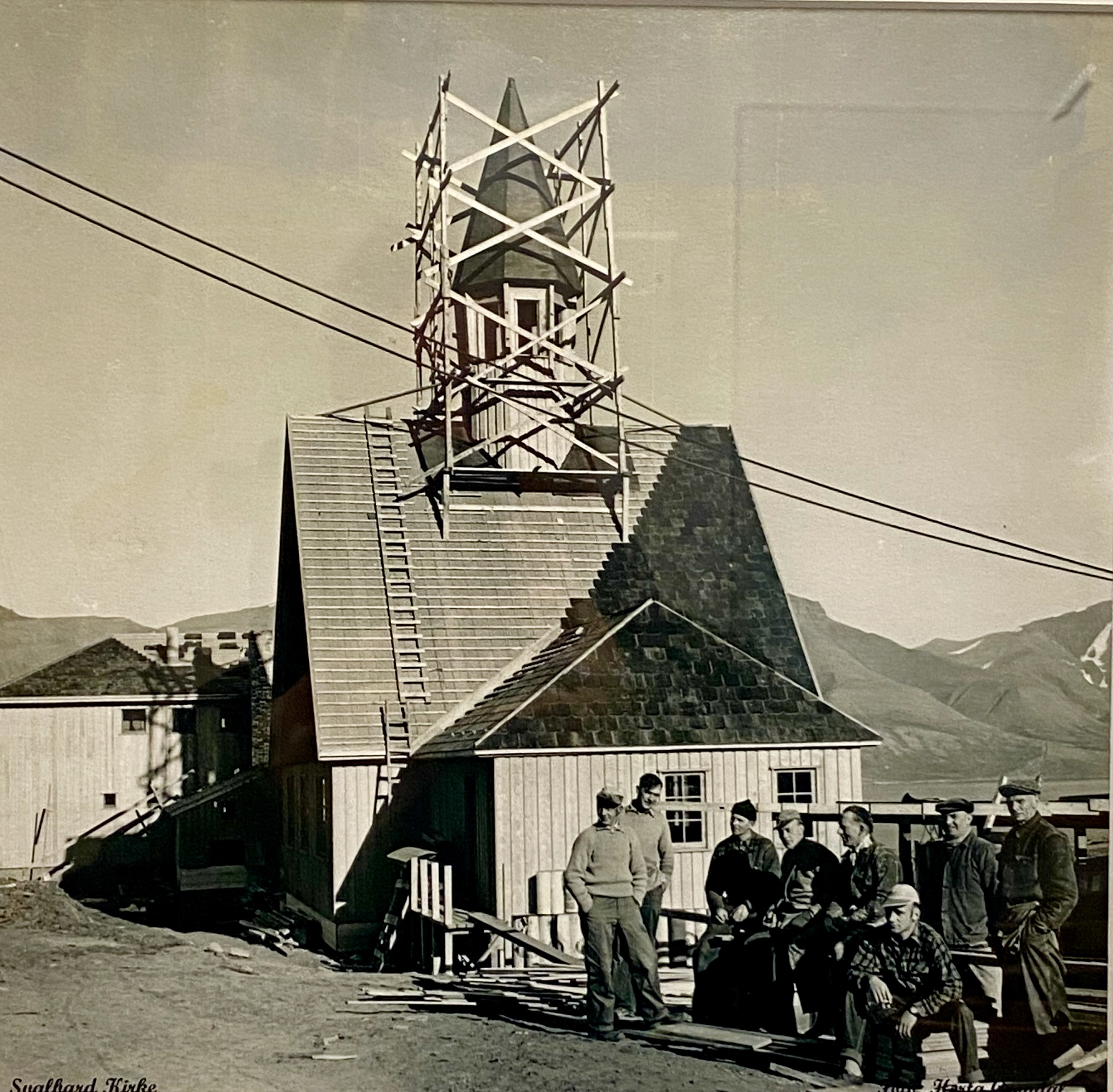
This is what the church looked like at the time of its construction.
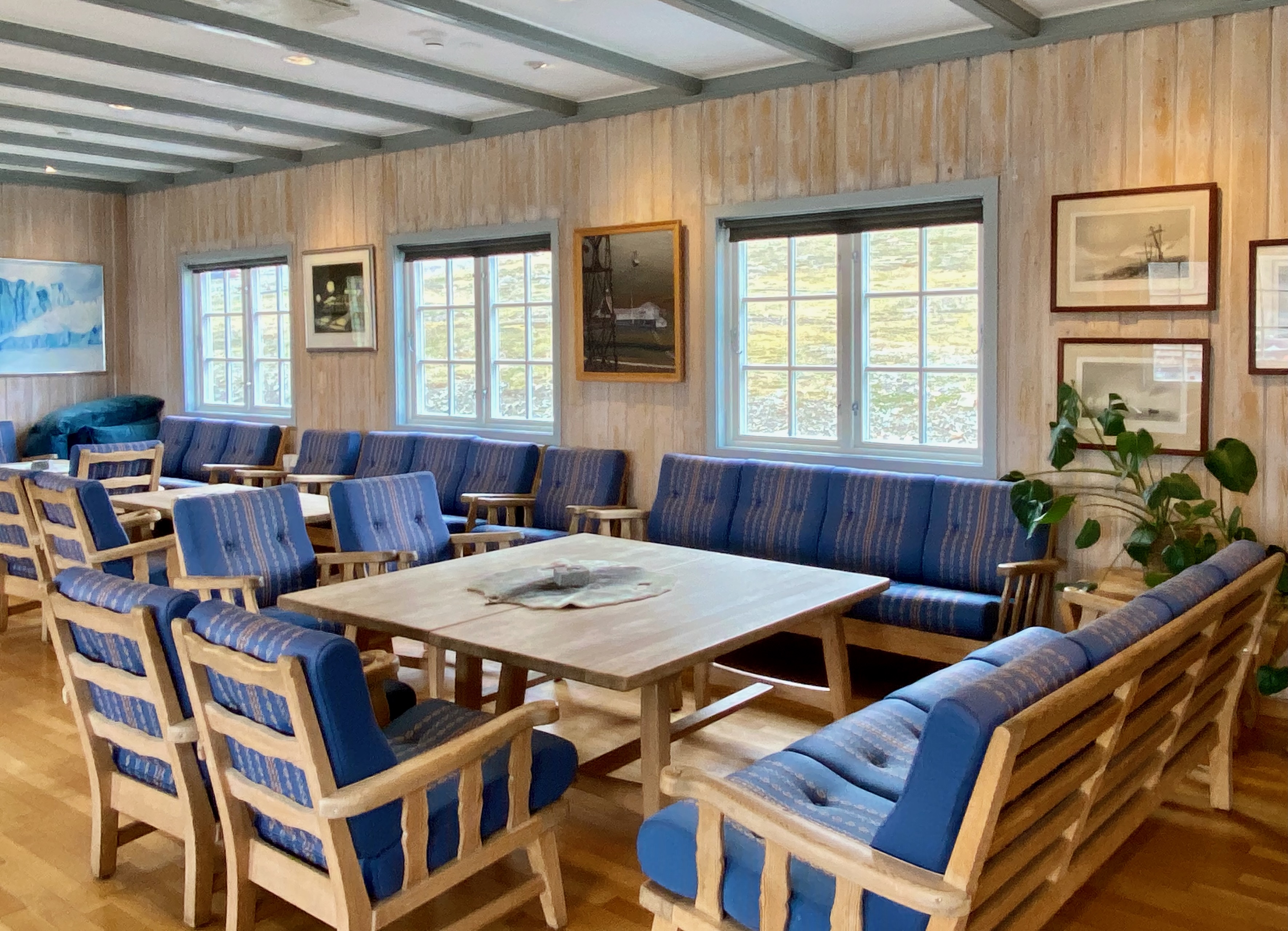
It’s an astonishing Protestant church. You have to take off your shoes and go up to the first floor, where you will find a large living room with a fireplace, unlimited coffee, two pianos, and an altar with icons at the far end. It’s a church like no other I’ve ever seen.
I continue 600 metres further on to the old cemetery. It’s all alone, isolated on the hill and surrounded only by the wooden remains of the mining era. I was told that no one had been buried there since the 1950s.
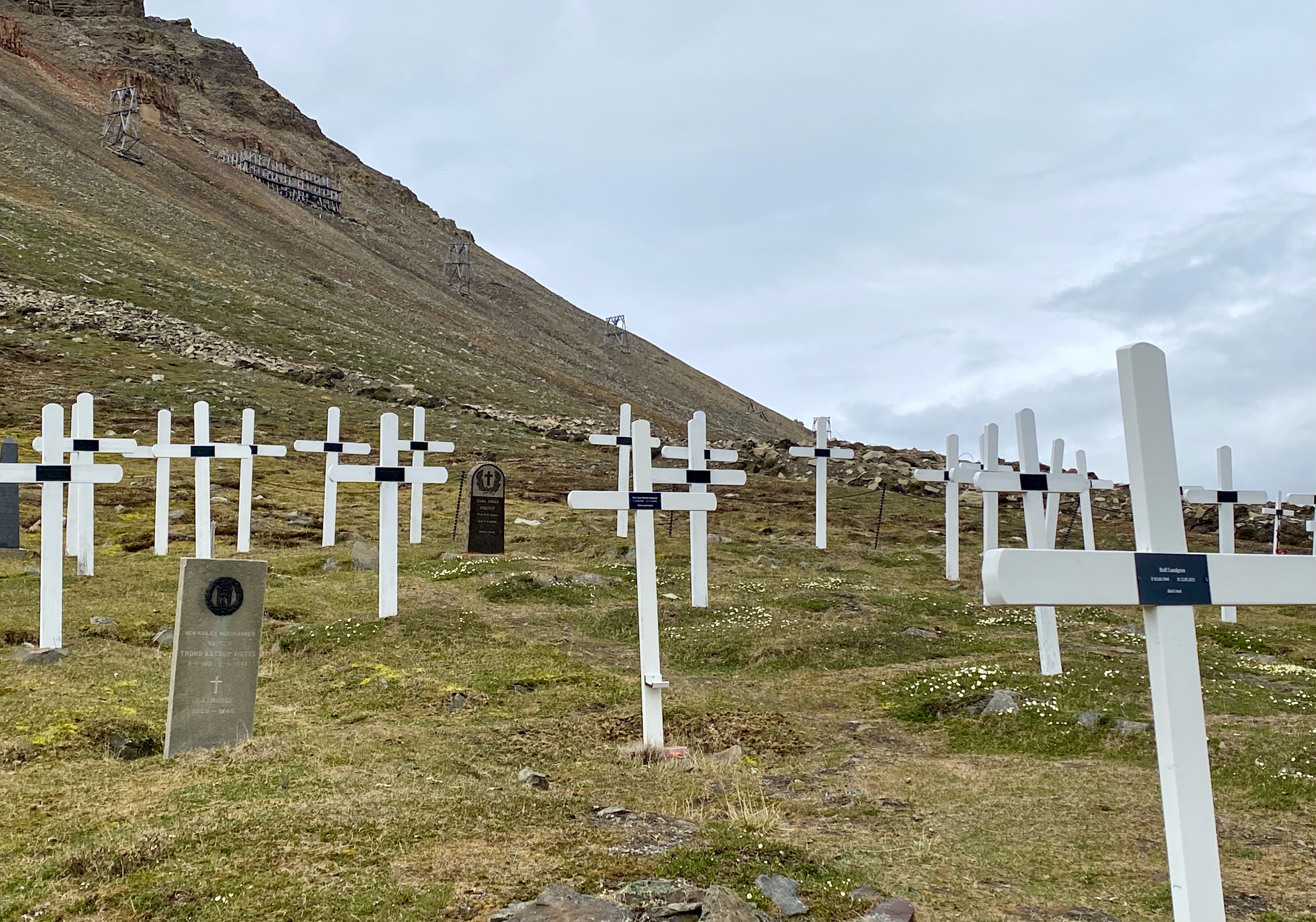
However, I discover two graves from 2013 and 2015. These may be cremations, for which the same hygiene precautions are not required.
Back in the town centre, I almost bumped into an Arctic reindeer.

One last detour to the North Pole Museum. Amundsen’s epic journey to the North Pole is recounted there through documents and artefacts from the period. A few old films provide insight into the madness of these men and the challenging conditions they faced during these expeditions.
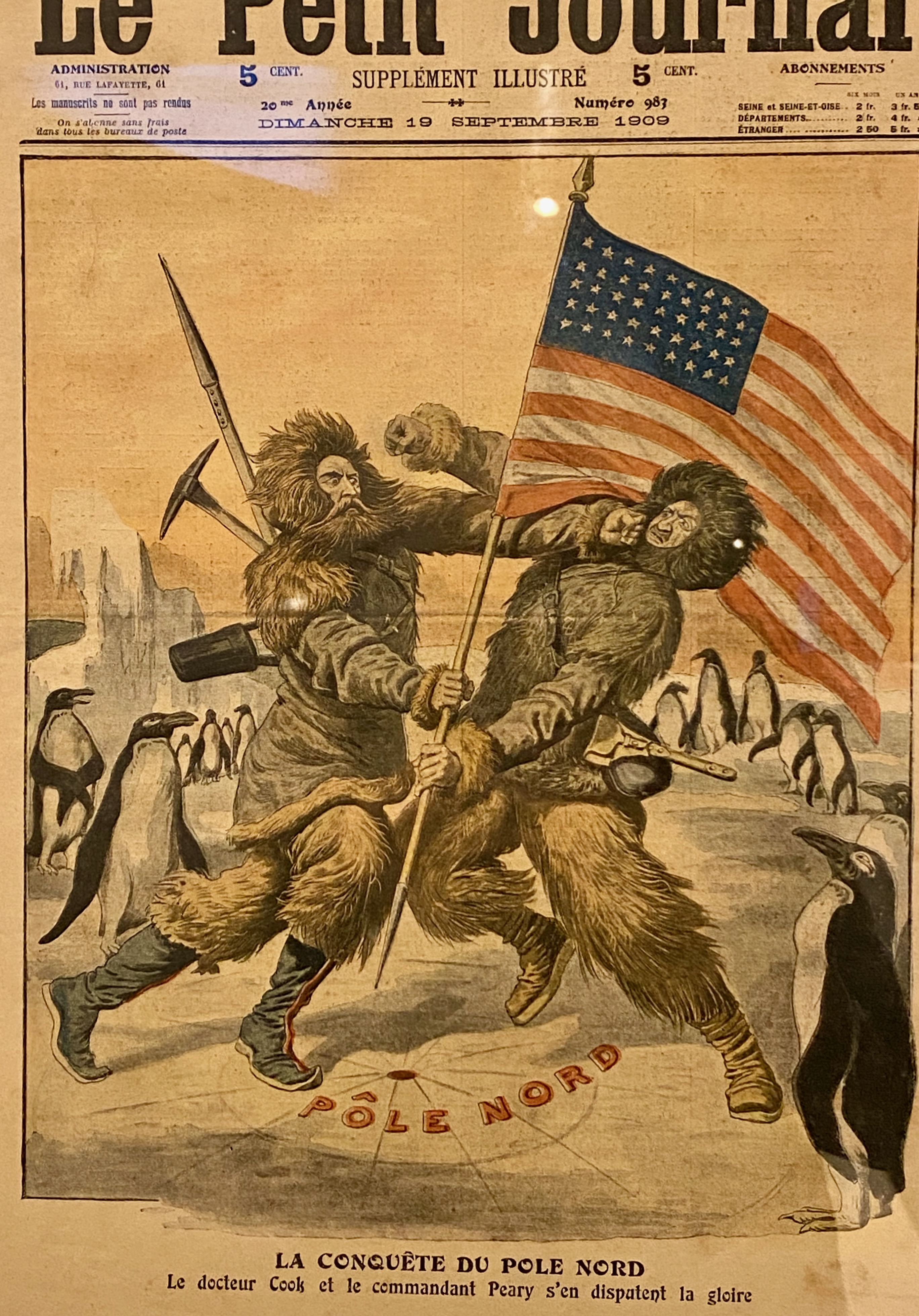
The museum pays more homage to the Norwegian Amundsen than to the Italian Nobile. Without Nobile, however, none of this would have been possible. It was Nobile who built the airship Italia, later renamed Norge, which enabled them to fly over the North Pole. The two men then fell out, as we would say today. Supported by Mussolini, Nobile accused Amundsen of stealing all the limelight.
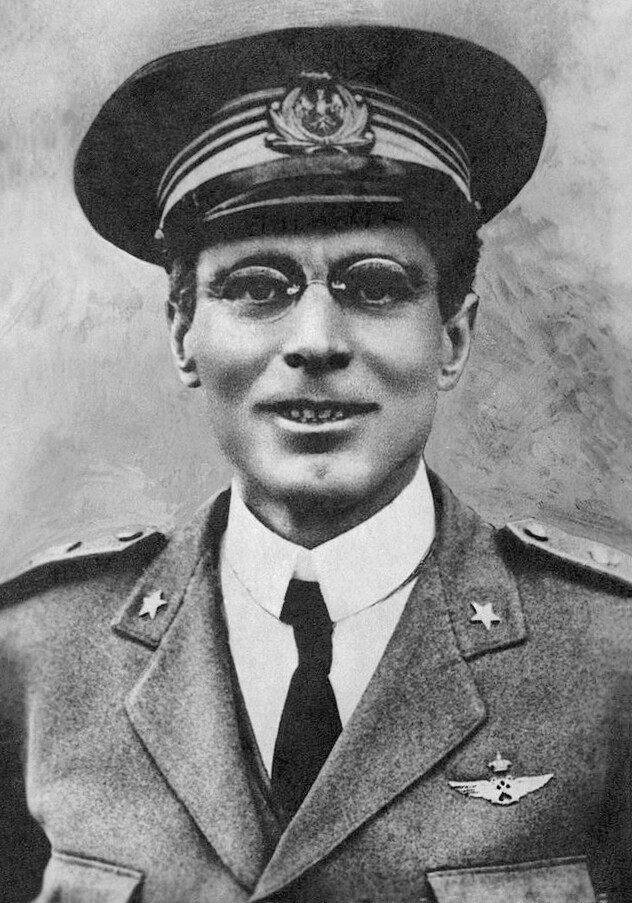
Umberto Nobile was an Italian engineer and explorer.
Let’s move on. A few years later, Nobile and his team crashed in an airship north of Svalbard. A huge rescue operation involving more than a thousand people and numerous boats set out to search for them. When the rescuers finally found the survivors, Nobile, who had suffered a fracture, was saved first. He was criticised for this; in the Titanic, for example, the captain always leaves last.
Amundsen also took part in the search, flying a French seaplane. It was then that he disappeared forever. The Norwegians never forgave Nobile for the loss of their national hero. Even a hundred years later, they still bear a grudge against him.
I arrive in Oslo late in the evening, after 11 p.m. It was dark and warm. Two sensations I hadn’t experienced in a week. I have to get used to them again.
SVALBARD AND OSLO, JUNE 27, 2025 – DAY 7
Here are six more or less amusing facts about Svalbard that I learned while I was there:
-
There are no spiders on the archipelago because of the cold. In fact, this is partly untrue (I checked on a website dedicated to spiders — yes, really!). Apparently, there are two very rare species on the west coast that can withstand the polar winter.
-
There are no cats on the archipelago to prevent them from killing the birds, most of which nest on the ground.
-
You cannot be buried in Svalbard. You can certainly die there, but the coffin must be taken back to Norway. The reason? The permafrost (permanently frozen ground) prevents bodies from decomposing. This gives rise to fears about viruses. There is a cemetery in Longyearbyen, but it has not accepted new burials since the 1950s.
-
You must take off your shoes at the entrance to houses and a number of public places, such as museums and hotels. This custom dates back to the mining era (the last mine closed in 2025), when miners’ boots carried coal dust. The rule still applies today, especially in winter, when shoes constantly carry snow and mud.
-
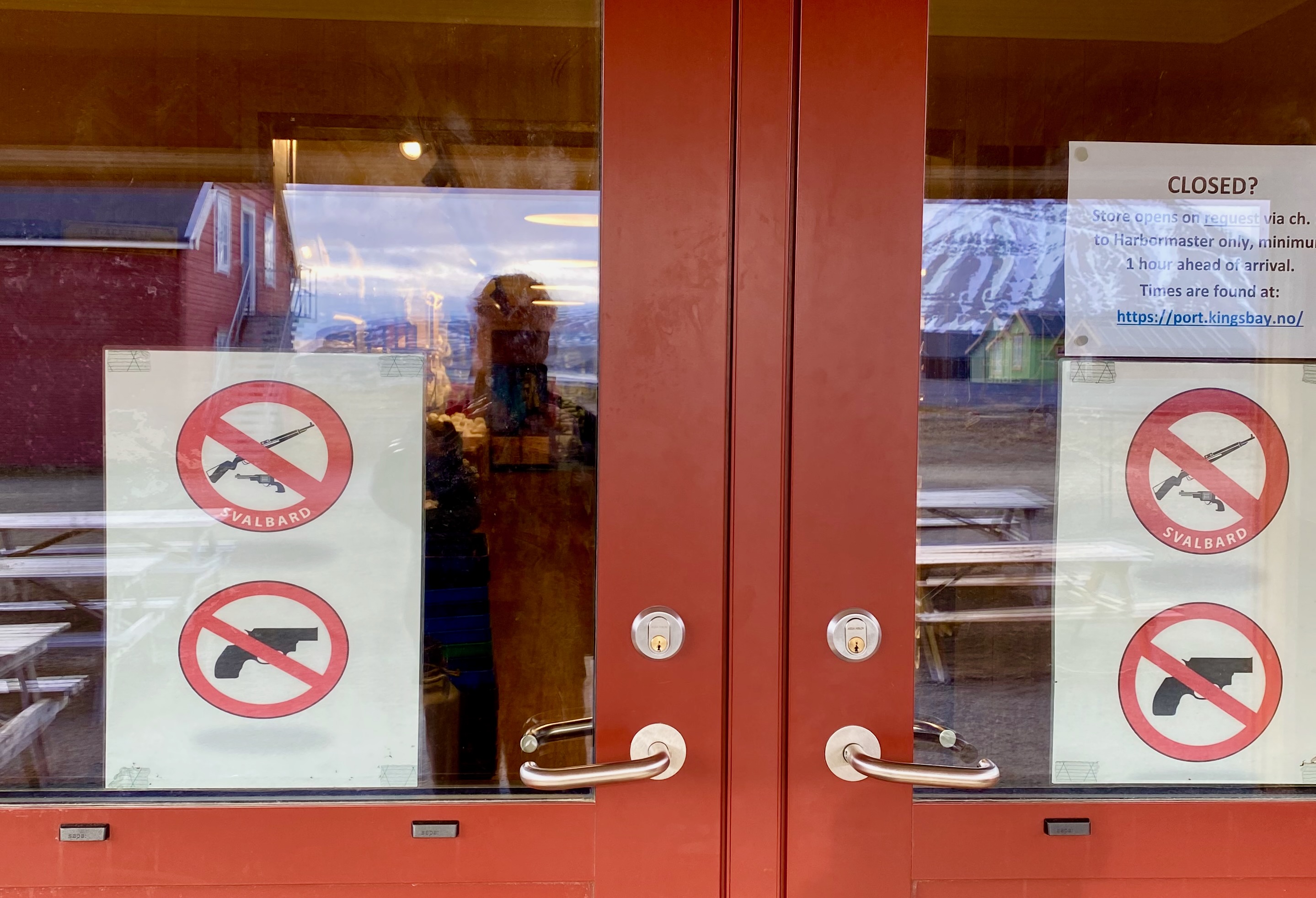
It is forbidden to enter shops with weapons. Many Norwegians in Svalbard carry weapons at all times (due to the presence of polar bears). In fact, it is illegal to leave the city limits of Longyearbyen without a flare gun and a rifle.
-
The streets have no names. Instead, they are referred to as ‘Road 500’, ‘Road 219’, and so on. If you live at number 19 on Road 500, for example, your address would be ‘Road 500 19’.
Here are two novels that have been translated into French (in English, I don’t know) and are recommended for a stay in Svalbard :
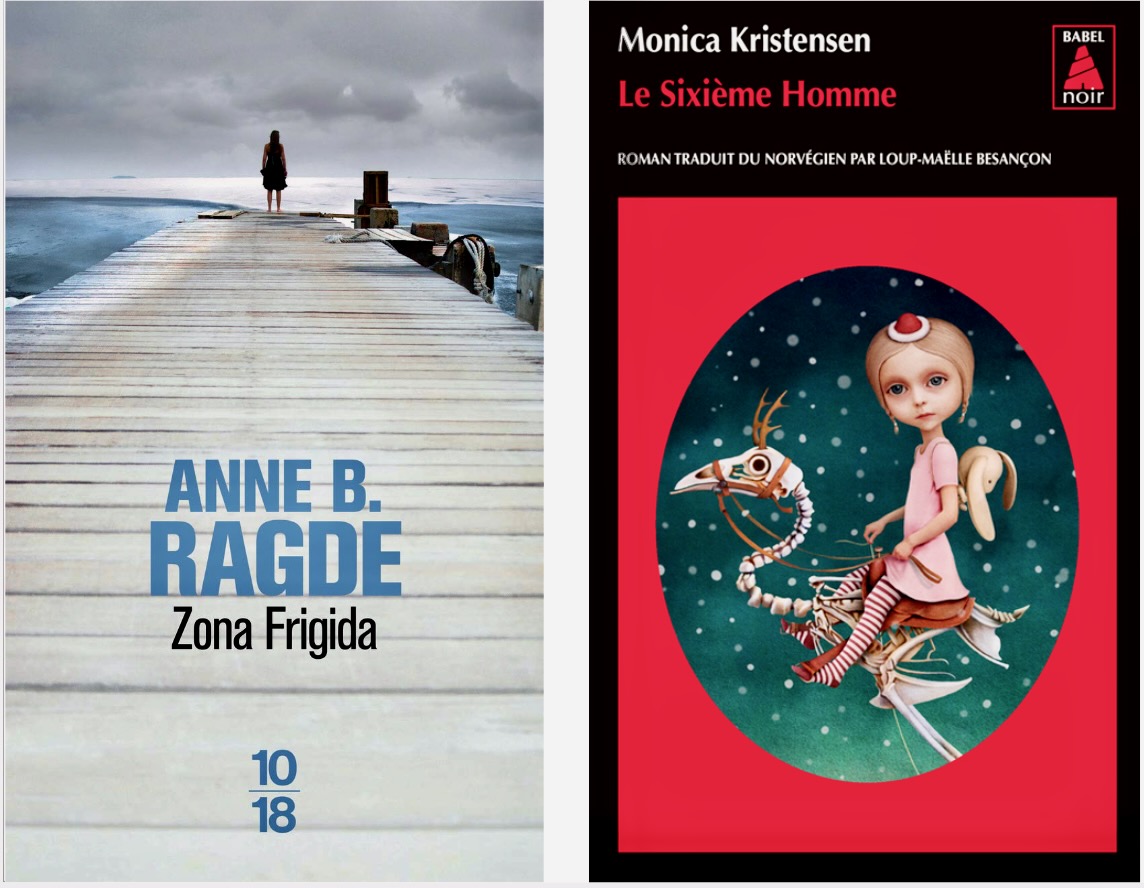
Zona Frigida by Anna B. Ragde: A small-boat excursion around Svalbard. With a little detective story (and polar bears!). Remarkable.
The Sixth Man by Monica Kristensen. This crime novel is set in Longyearbyen in the 21st century during the winter when the main mine was still in operation. I won’t say any more as I haven’t finished reading it yet. Kristensen also wrote Operation Fritham, which is set in the archipelago.
